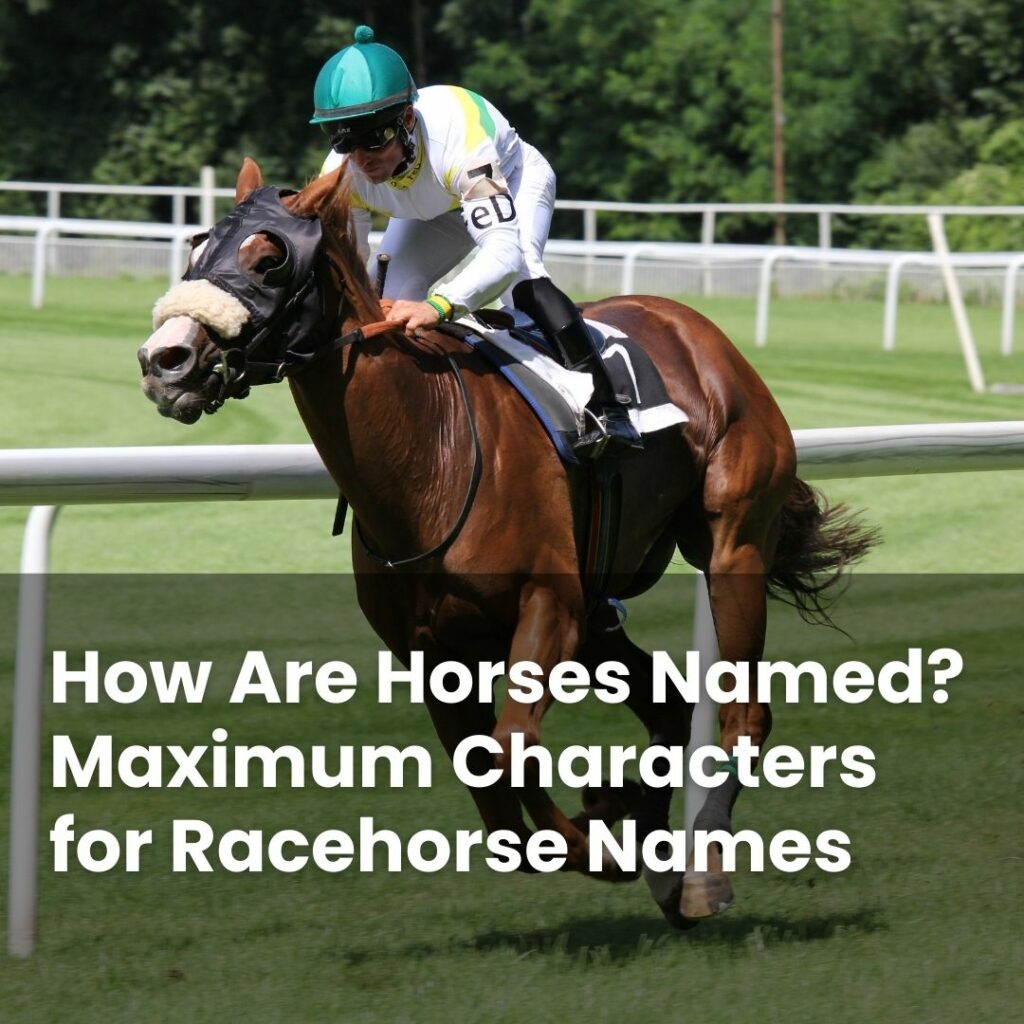
Ever wondered how racehorses end up with such eye-catching or unusual names when you’re glancing at the day’s runners? Naming a racehorse is more than just picking something catchy, there are strict rules and traditions to consider, some of which might surprise you.
Perhaps you’ve seen names that made you smile, or left you scratching your head, yet every name you’ve heard on the track has had to meet a specific set of standards. From the number of letters allowed to the meanings tucked behind words, these guidelines shape exactly what horses can be called during their careers.
You might think anyone can call their horse anything they fancy, but there’s a whole process that keeps things fair, respectful and clear for everyone. Stick around to discover what goes into choosing a racehorse’s name, how long these names can be, and a few of the more interesting rules that could trip up even the most creative owners.
How Do Racehorse Naming Rules Work?
When it comes to naming a racehorse in the UK, you cannot simply pick a random word or phrase. Names are approved and registered by the British Horseracing Authority (BHA), which applies a clear set of guidelines so nothing clashes with other names and everything remains suitable for public use.
A name must not duplicate one already taken by an active or recently active horse, and names of famous horses from the past are protected to honour their legacy. This avoids confusion on race days and in historic records.
Offensive or inappropriate language is ruled out. Anything that could be seen as rude, political or controversial is declined, and potential meanings in other languages are considered to keep names suitable for all audiences.
Commercial terms are tightly controlled. Brand names or trademarks need written permission from the rights holder, which prevents the sport from turning into a billboard and keeps competition fair.
With the ground rules set, the next question is how much space you actually have to play with.
Maximum Character Limits For Racehorse Names In The UK
In the UK, the maximum length allowed for a racehorse’s name is 18 characters. This count includes spaces and punctuation marks, not just letters, so even a simple hyphen or gap between words reduces what you can use.
Keep this limit in mind if you are aiming for a longer phrase or a name made up of several words. If the choice goes past 18 characters, it will not be approved.
Numbers are not allowed within racehorse names unless they are written out, so “First Place” is fine, but “1st Place” is not. Symbols such as @ or & are not accepted either. Only standard letters, spaces, full stops, apostrophes and hyphens count toward the limit.
When you see short and snappy names on a race list, or clever wordplay squeezed into the limit, it is usually because of this strict character rule set by the BHA.
So who decides whether a name that fits the length also gets through the rest of the checks?
See Our Top-Rated Online Casinos
Find the best online casino bonuses, read reviews from real players & discover brand new casinos with our list of recommended sites
Who Approves Racehorse Names In Britain?
In Britain, racehorse names must be officially approved before a horse can compete. This responsibility sits with the BHA.
Each submitted name is reviewed to ensure it is not already taken or confusingly similar to one in use, that it fits length and language rules, and that it does not infringe trademarks. If a name is rejected, the owner or breeder is told why and invited to propose another.
Only after the BHA gives approval does a horse receive its official identity on the racecourse. That green light makes records consistent and keeps the experience clear for everyone.
Before a name reaches that stage, though, many begin their life with the breeder.
How Are Foals Named By Breeders?
When a foal is born, the breeder usually chooses the first name idea, starting the horse’s official record if racing is the plan.
Plenty lean into pedigree. A foal’s name might blend part of the sire’s name with part of the dam’s, creating a neat nod to both parents. Others follow themes, such as a shared letter for a year’s crop, references to a stud’s history, or a meaningful place or event.
Once a name is chosen, it is submitted for consideration and checked against the same rules described earlier. Approval locks in the identity for life, which helps the horse take its place in racing’s wider family tree.
Those rules matter because some lines cannot be crossed, no matter how clever the idea.
Restricted And Prohibited Names For Racehorses
Naming a racehorse is fun, but there are firm boundaries.
Anything obscene or containing bad language is out. Names must work when read aloud to the general public, including children, so obvious double meanings are carefully screened.
References to public figures or royalty need direct written approval. That covers well-known politicians, celebrities and sporting icons. Without permission, these names will not pass.
Claims and honours are also restricted. Titles like “Derby Winner”, or names that suggest superiority such as “Champion” or “Best Thoroughbred”, can mislead and are not allowed. Descriptors that single out breed or colour in a boastful way are treated in the same spirit.
Exceptional horses from the past are given permanent protection. If a name belongs to a standout performer, it is retired to preserve that horse’s unique place in the sport.
Finally, brands, trademarks and company names require written consent from the rights holder. Even then, approval is not guaranteed, since the aim is to keep naming fair and uncluttered by advertising.
How To Check Name Availability And Register A Name
Before registering a racehorse’s name in Britain, owners can use the BHA’s online search to see whether a choice is free or reserved. If the name appears available and fits the rules, registration is handled through Weatherbys, which administers applications for the BHA. The submission includes key details such as pedigree and the preferred name.
The BHA then reviews the application against its guidelines. If the name fails on similarity, suitability or length, an alternative will be needed. Once approved, the name is tied to the horse for its entire racing career, keeping records clean and unique.
If you need support with your gambling, free, confidential help is available from GamCare and the National Gambling Helpline.
Can A Horse’s Name Be Changed After Registration?
In the UK, changing a horse’s registered name is possible, but only within tight limits. The BHA oversees requests and generally allows changes only if the horse has not yet raced under that name. Once a horse has run, the name is effectively set, which protects form lines and historic records.
If the horse is unraced, a formal request can be made and the fresh choice must still satisfy the same rules. Rare exceptions exist, for example where a registration error occurred or when a horse is exported and must meet different rules abroad.
So, if a change is on your mind, the window tends to close the moment a horse appears on a racecard.
Are International Character Limits Different?
Character limits do vary around the world. Many leading racing nations set their own caps, with some matching Britain’s 18 characters and others allowing slightly more or fewer.
The International Federation of Horseracing Authorities encourages broadly similar standards to help cross-border racing and to reduce duplication, but local rules can differ. When a horse travels, the original name is usually kept if it fits the destination’s requirements. If not, a shortened or adjusted version may be used so the identity remains clear wherever the horse competes.
That global picture helps when you start to notice the extra details that appear alongside a name.
Naming Conventions For Prefixes, Suffixes And Family Names
In British racing, some names use prefixes or suffixes to signal a connection to a particular breeder, stud or family line. A prefix sits at the start, such as “Ballydoyle Star”, while a suffix appears at the end, like “Spirit of Newmarket”. These are often controlled by long-standing breeders, so permission is typically needed to use them.
Suffixes also indicate a horse’s country of birth in official records. You might see “Thunder Strike (IRE)” for Ireland or “Silver Echo (FR)” for France. It is a simple way to track origin when horses from different nations meet.
Family names can appear as subtle nods to notable ancestors. Breeders sometimes weave in part of a dam’s name to maintain continuity through a successful line, which helps followers of the sport spot connections at a glance.
With all that in mind, what happens to a name once a career is over?
What Happens If A Racehorse Name Is Reused Or Retired?
In the UK, some racehorse names are released for reuse after a period of inactivity, often five years, provided the original horse did not achieve notable success. This pause prevents mix-ups with active runners and keeps the database tidy.
Names belonging to standout performers are permanently protected and cannot be used again. That safeguard preserves the identity of celebrated horses and avoids any suggestion of trading on past achievements.
If an application includes a name that is still in use, on hold or protected, it will be rejected. In rare cases an old name may return, but only where it is unconnected with a significant past horse and meets all criteria.
From first submission to final retirement, the rules exist to give every runner a clear, consistent identity. That way, when a name appears on the card, everyone knows exactly which horse they are watching.