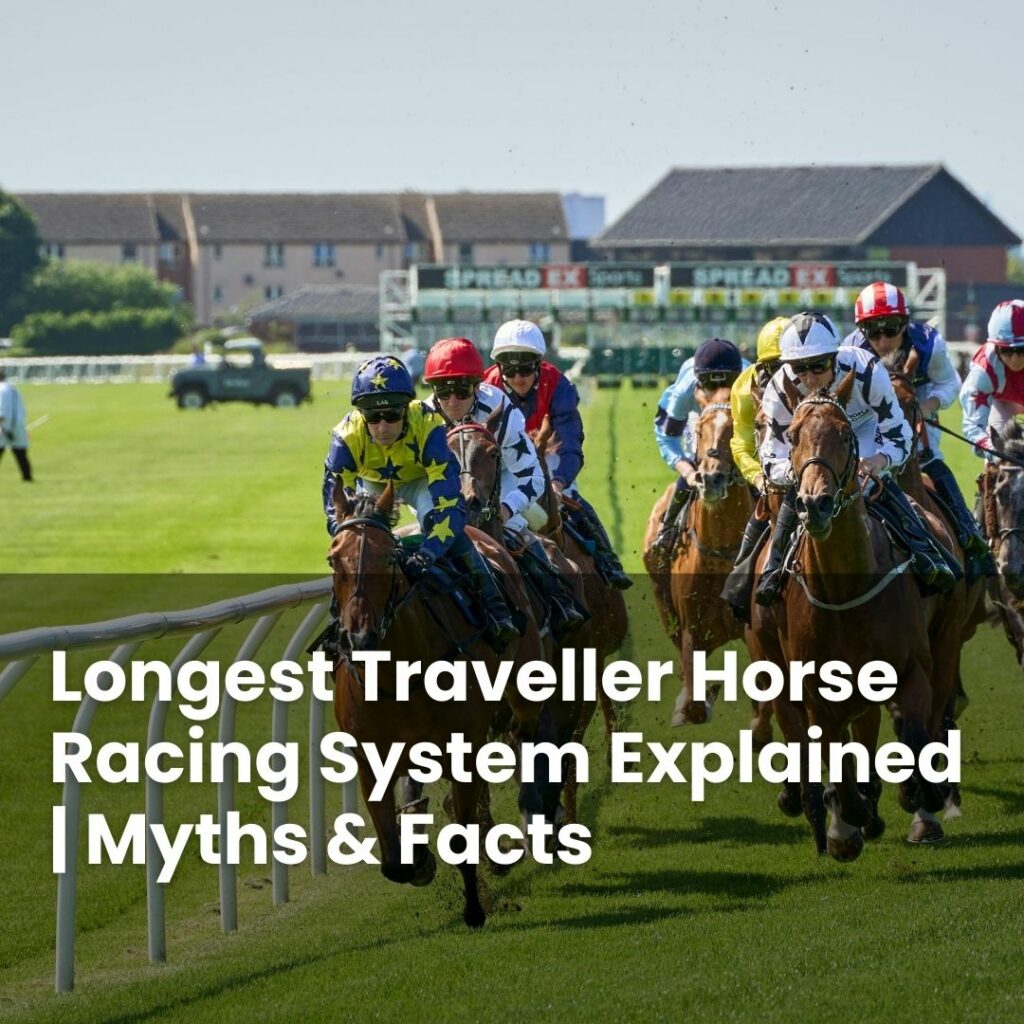
Horse racing systems are popular talking points among punters in the UK, sparking plenty of discussion about which methods have any real basis. One approach that often comes up is the Longest Traveller, which focuses on horses that have travelled the farthest distance to compete in a race.
Some say the extra miles on the road hint at clear intention from the trainer, while others see it as a theory that does not stand up to proper scrutiny. It is easy to see why there is curiosity, and just as much confusion, around the idea.
Before deciding where you stand, it helps to understand what the system actually claims, why people believe it might work, and whether the numbers back it up. Here is the Longest Traveller approach explained in plain English.
What Is The Longest Traveller System In Horse Racing?
The Longest Traveller system is a straightforward angle some people use when deciding which horse to back. The thinking is that if a horse has been sent a long way to a racecourse, the trainer must have a sound reason for making the trip. This is seen up and down Britain, with yards occasionally sending runners hundreds of miles to take part.
In practice, followers look at a race’s declared runners and identify the horse that has travelled the furthest from its training yard to the track. Racecards and racing sites often list a horse’s training base, which makes it possible to work out which runner has come the longest way.
The belief behind the method is that the time, effort and expense of a long journey can signal confidence from the connections. This idea is often mentioned in relation to jump racing, where targeting the right track and conditions can matter a great deal. Even so, the Longest Traveller system is only one lens through which to study a race. It does not claim to guarantee results, and many other factors still carry significant weight.
How Is Travelling Distance Calculated On UK Racecards?
When looking at a UK racecard, you will sometimes see where each horse is trained and, in some cases, how far it has travelled to reach that day’s meeting. The distance is typically measured in road miles between the trainer’s yard and the racecourse, using driving routes rather than straight lines. That gives a practical picture of the journey the horse and team actually make.
Racecard providers often rely on mapping tools, postcodes and online services to calculate these figures. The trainer’s address is used as the starting point and the racecourse as the destination, with the route kept simple and direct. It is a factual measure of distance, not a record of the exact travel schedule or any stops along the way.
Of course, a number on a page only tells you how far the lorry has gone. The more interesting question is what that journey might mean once the horse reaches the track.
See Our Top-Rated Online Casinos
Find the best online casino bonuses, read reviews from real players & discover brand new casinos with our list of recommended sites
Why Might Travelling Horses Perform Differently?
Long journeys can affect a horse in several ways. Transported by lorry, even a well-cared-for traveller spends hours standing and balancing in a moving vehicle. That can be draining, and some horses are more sensitive to it than others. Behaviour matters too. Calm, seasoned travellers often handle new surroundings well, while more anxious types can arrive on edge and find it harder to settle before a race.
External factors add another layer. Heavy traffic or poor weather can mean longer time on the road, and changes in temperature may leave a horse needing extra time to warm up. Many yards manage these risks by planning arrival times carefully or using racecourse stabling the night before, though not every runner will have the same routine or level of experience.
Trainer experience plays a part as well. Teams that frequently send horses on longer trips tend to have established practices that help their runners cope. Others may travel long distances only occasionally, which can make the experience more demanding for horse and staff alike.
So the theory has some plausible reasoning behind it. The next step is to see how this stacks up against the evidence.
What Evidence Supports Or Refutes The System?
Interest in the Longest Traveller system often leads people to look for proof that it works, but the evidence is mixed. Anecdotes do pop up, such as a horse travelling a long way and winning well, or a trainer known for successful raids far from home. The difficulty is that these examples are selective and may overlook crucial details, like the horse’s class, the level of opposition, the ground, or whether the trainer targeted a race because it suited the horse for reasons unrelated to distance.
Larger studies of British race results have not found a consistent pattern showing that the furthest traveller wins more often than expected once other variables are taken into account. Performance tends to be explained by a blend of form, ability, conditions and placement. Where analysts have tested the system over time, results have generally not shown a reliable profit when using travel distance alone.
In short, distance on its own rarely tells the whole story. That picture tends to appear again when people keep their own records.
Typical Results And Sample Bet Records
Put into practice, the Longest Traveller approach usually produces mixed returns. Some days the furthest traveller wins or places, but many selections do not figure. People who track results often record the horse, journey length, price and finishing position to see how the idea holds up over time.
Imagine backing the longest traveller with £1 stakes across 50 races. You might collect a few winners, sometimes at bigger prices, but those positives are often outnumbered by losing bets. In many shared records, the total returned does not cover the total staked, leaving a negative result overall. That pattern tends to persist unless other sound race-reading elements are added alongside the travel angle.
Still, some followers feel the system has its moments. So when do they say it looks most appealing?
When Does The System Tend To Work Best?
Supporters suggest it can look stronger under specific circumstances, though outcomes remain variable. Smaller midweek meetings are often mentioned, where fields can be less deep and a well-placed runner may stand out. There is also interest when a trainer with a solid record sends only one horse a long way to a meeting, sometimes called a sole representative. The thinking is that the yard would not commit time and resources unless the race looked suitable.
Quieter parts of the calendar are sometimes flagged too, such as midwinter or days with few high-profile fixtures. At these times, trainers might travel further to find ideal ground, a workable handicap mark or less demanding opposition. In contrast, big festivals tend to attract stronger fields from every direction, which reduces any perceived edge from distance alone.
Even where these patterns are observed, none of them create fixed rules. Individual races differ, and the travel angle works best as part of a broader assessment rather than the only deciding factor.
With that in mind, it pays to stay cautious when bold promises are made.
How To Spot Misleading Claims About The System?
The Longest Traveller system attracts sales pitches, particularly online, so it helps to spot common red flags. Be wary of any claim that guarantees profit or says the method always wins. No approach in racing can offer that, because results depend on many moving parts.
Watch for selective reporting. Some sites showcase only winners and skip over losses, creating a distorted picture. A handful of isolated winners proves little without full records across a meaningful sample. Reliable assessments explain the logic, show clear data and acknowledge limitations.
Treat expensive guides and subscriptions with care, especially when backed by dramatic testimonials or vague statistics. Look for transparent reasoning, long-run results and sources that explain how conclusions were reached rather than leaning on hype.
Taken together, the Longest Traveller idea is best treated as a small angle within a wider race assessment, not a shortcut to profit. If you choose to place a bet, set sensible limits and find support at begambleaware.org if you need it.