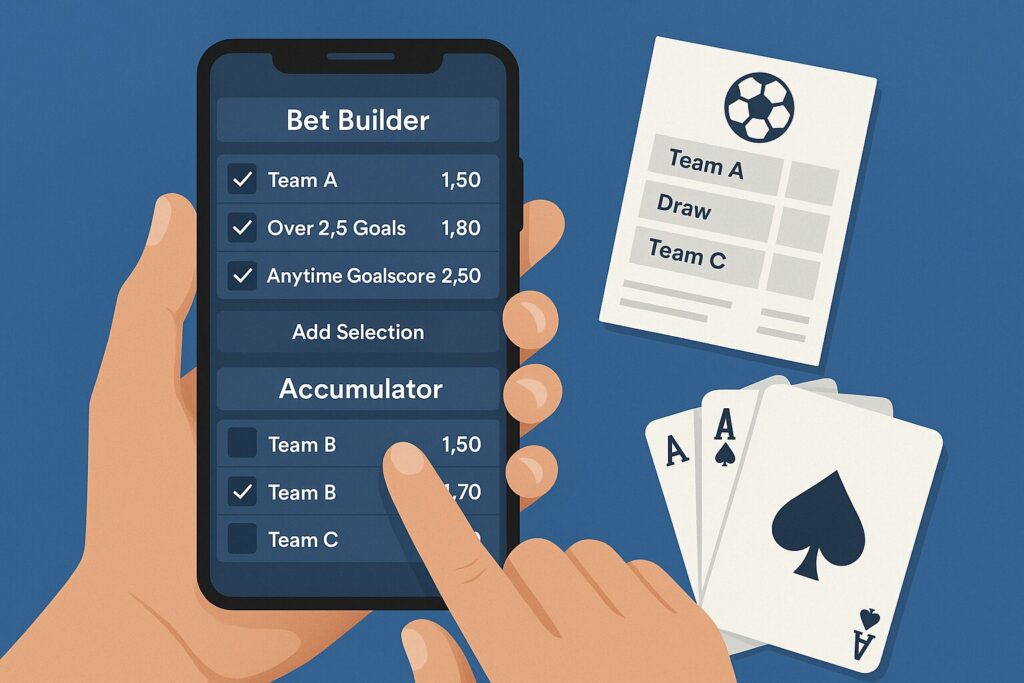
Understanding the difference between a bet builder and an accumulator can make your betting experience clearer and more targeted. Many sites offer both options, but they serve different needs and work in distinct ways.
This post explains how each option operates, the main differences, how bookmakers settle these bets, common pitfalls, and how limits and payouts can vary. If you are under 18 you must not bet; all content here assumes readers are adults.
What Is a Bet Builder and How Does It Work?
A bet builder is a tool that lets you combine several selections from the same sporting event into a single wager. For example, you might combine “over 2.5 goals”, “Player A to score”, and “both teams to receive a yellow card” from one football match into one overall bet with a single price.
Bet builders focus on the same event, which means you can mix markets such as goals, corners, cards, and player statistics in one place. Different operators offer varying market ranges and limits; some allow many selections, others restrict which markets can be combined. These operational differences will affect what you can include in a bet and the final odds.
Operators also differ in how they present the tool. Some present preset combinations to speed up the process, while others let you pick any eligible market for that match. If you want a fuller comparison of which bookmakers offer specific features, you can view our operator guides.
What Is an Accumulator and How Does It Work?
An accumulator combines two or more selections from different events into a single bet. Each selection is a leg of the acca and all legs must win for the bet to pay out. The overall odds are the product of the individual odds for each leg, which is why accumulators can produce large returns from small stakes.
Accumulators can cross sports and competitions, so you might mix a football match winner with a horse race result and a tennis match outcome in one wager. Bookmakers set minimum and maximum numbers of legs for an accumulator, and sometimes restrict which markets are eligible, so it is useful to check the rules for the operator you’re using.
See Our Top-Rated Online Casinos
Find the best online casino bonuses, read reviews from real players & discover brand new casinos with our list of recommended sites
Bet Builder Vs Accumulator: Key Differences
The core distinction is simple: bet builders draw all selections from one event, while accumulators combine picks across multiple events. That structural difference creates practical consequences.
Because bet builders combine correlated markets within one match, operators sometimes limit the number of selections or the stake and payout more tightly than for accumulators. Accumulators, drawing from separate events, typically allow a wider range of markets and more legs, but they require every leg to succeed, which increases risk.
Settlement features such as voids, pushes, and cash-out availability can vary between the two formats. Before placing a bet it is sensible to check how a particular bookmaker handles these cases so there are no surprises at settlement.
Can You Combine Selections From The Same Match In a Bet Builder?
Yes. Combining different markets from the same match is the defining point of a bet builder. You could mix a correct score selection with a player to be booked and a corners market, provided the operator offers these markets for that fixture.
However, the exact markets and how many selections you can add depend on the operator. Some sites restrict specific combinations or cap the number of selections in a single bet builder. Checking the terms for the match in question helps avoid attempting combinations that are not permitted.
If you want to see a snapshot of what various operators allow, our comparison pages list current options and restrictions.
How Are Bet Builders and Accumulators Settled?
Settlement follows each operator’s rules once all relevant events conclude. Outcomes for each selection determine whether the overall bet pays, is lost, or is partially returned. These rules influence final payouts, so they are worth understanding before placing a bet.
When a market outcome is cancelled or a player does not take part, operators treat that selection in different ways. This influences whether the bet continues with fewer legs or is voided entirely.
Many sites offer a cash-out option that lets you settle a bet before every selection finishes, but availability and value vary with live developments. Each-way treatments are more common on accumulators in sports like horse racing and involve separate calculations for the win and place portions.
Understanding an operator’s approach to voids, pushes, cash-out and each-way settlements clarifies how a bet will be resolved and what to expect from the final return.
Voided Selections and Push Rules
A void selection is removed from the bet when a market is cancelled or a participant is absent. For accumulators, the bet often continues with the remaining legs and adjusted odds. With bet builders, the effect of a void can differ: some operators simply remove the selection, others may void the entire bet. Push outcomes, such as a handicap finishing exactly level, are sometimes treated like voids but not always.
Knowing these distinctions in advance reduces confusion at settlement and helps set realistic expectations for returns.
Cash-Out and Each-Way Settlement Nuances
Cash-out offers a way to settle a bet early based on the current state of play, although the amount offered depends on how the selections are unfolding. Cash-out may not be available for all bet builders or accumulators and can change quickly during live events.
Each-way bets split the stake between win and place parts and are handled differently from single-outcome bets. Each-way accumulators require separate treatment of those parts and often rely on minimum field sizes or place terms specific to the sport. Because bet builders usually combine in-match markets rather than outright outcomes, each-way options are less commonly applicable to them.
Do Odds And Payouts Differ Between Bet Builders And Accumulators?
Yes, they can. Accumulators multiply the odds of each independent selection to create a single combined price. Bet builders appear similar in calculation, but bookmakers may apply different margins or pricing rules because the selections come from the same match and can be correlated.
These pricing differences mean similar-looking bets on different platforms can produce different returns. Some operators price accumulators more aggressively, others have bespoke pricing for bet builders. That variation is why comparing odds and terms across operators can be worthwhile.
Odds and payouts are determined by the operator’s rules and margin structure, so review them before committing funds and consider comparing offers to find the best fit for your approach.
When Is a Bet Builder Better Than an Accumulator?
A bet builder is often the better choice when you want to combine several outcomes from one match—especially if you are interested in mixing player stats, cards, corners and goals into a single wager. It is also useful when an accumulator would not permit more than one selection from the same fixture.
High-profile matches that attract many market options tend to be where bet builders show their strengths, because they allow tailored bets focused on a single game. If your idea is to back outcomes across separate fixtures, an accumulator remains the appropriate format.
Deciding between the two comes down to whether you prefer depth within one match or breadth across multiple events. Checking the operator’s market availability and any limits helps you pick the right tool for your plan.
Common Mistakes To Avoid With Bet Builders
A frequent error is assuming every market can be combined. Operators restrict combinations, and some markets simply cannot be included together. Attempting prohibited combinations leads to disappointment when a bet cannot be placed or is adjusted unexpectedly.
Another mistake is overlooking settlement rules for voids and pushes. Different treatments can materially change the result of a bet, so familiarising yourself with those rules avoids unwelcome surprises. Also be aware of maximum payout rules and stake caps that might limit returns on large or complex bet builders.
Finally, piling on too many selections increases the chance of losing the entire bet. While larger combinations may lead to higher quoted returns, each added selection increases the required correct outcomes. A measured approach to selection count and stake size keeps the risk profile clearer.
If you want a simple comparison of features and restrictions across operators, our guides can help you make a more informed choice.
How Do Bookmakers Limit Bet Builders Compared With Accumulators?
Bookmakers apply limits differently because bet builders and accumulators pose different pricing and risk profiles. Limits can relate to the number of selections, which markets are permitted, maximum stake, and total payout.
Market and selection limits usually cap the number of picks you can add to a bet builder, commonly around six to eight selections, though this varies by operator and event. Accumulators often allow more legs drawn from different fixtures.
Stake and payout limits may be lower for bet builders because combining correlated markets raises the operator’s exposure. Operators may also impose minimum odds for eligible selections or restrict certain market types within bet builders.
Being aware of these rules and checking an operator’s terms before betting helps ensure you understand what limits might apply to the bet you want to place, and avoids surprises at settlement.
For a quick view of how different bookmakers treat these features, consult our operator comparison pages for up-to-date details.
Final word: both bet builders and accumulators have distinct strengths, so choose the format that fits your approach, check the operator’s rules before you bet, and use the comparison tools available here to find the features you need.
**The information provided in this blog is intended for educational purposes and should not be construed as betting advice or a guarantee of success. Always gamble responsibly.