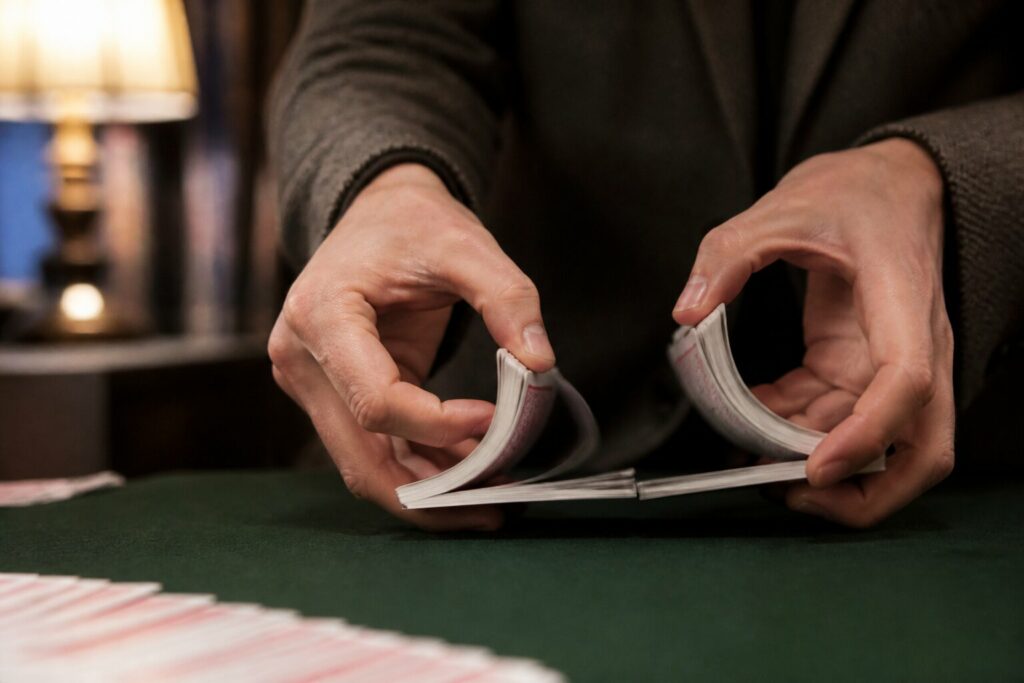
Whether you’re playing poker with friends or want to impress at your next games night, learning to shuffle a deck with flair can lift your card skills. Shuffling is more than mixing cards — it’s a chance to add style and confidence at the table. With a few techniques and practice, anyone can pick up moves that look slick and feel satisfying to perform.
From classic shuffles to eye-catching flourishes, this guide covers methods that suit beginners and more confident handlers alike. Read on to build steady handling and a few standout tricks that make handling cards more enjoyable.
Why Is Card Shuffling Important?
Shuffling mixes the deck to make each deal unpredictable and fair, preventing anyone from anticipating the order of the cards. A good shuffle reduces patterns and bias, so outcomes depend on chance rather than previous arrangements. This protects the integrity of the game and helps maintain trust among players.
Shuffling also helps prevent collusion and manipulation. When the deck is genuinely random, it is much harder for players to gain an advantage by tracking card positions or recognising recurring sequences. Clear, consistent shuffling practices therefore support a level playing field and show respect for fellow players.
In regulated settings, operators use certified shuffling methods to meet strict rules and ensure randomness. These practices are often documented and audited to provide transparency and accountability. Even at home, learning reliable shuffle techniques signals that you take the game seriously and want everyone to have a fair experience.
Keeping the deck in good condition and choosing appropriate shuffle techniques both contribute to smooth play and consistent results. That includes replacing very worn cards, using the right shuffle for the number of players and game type, and letting different players shuffle when appropriate to maintain impartiality. Small details like these make a noticeable difference to the quality and fairness of play.
Essential Card Shuffling Techniques Explained
Mastering a few basic techniques gives you a solid foundation for most card handling. The overhand shuffle involves transferring small packets of cards from one hand to the other, producing a controlled mix that’s easy to learn. The riffle shuffle splits the deck and interleaves the cards so they blend thoroughly; it can be done on a table or in the hands once you’re comfortable with the motion. The Hindu shuffle draws small sections off the top into the palm in a flowing motion, which is gentle on cards and looks graceful in action.
Each method has strengths: the overhand is accessible and quick, the riffle gives a deeper mix, and the Hindu is smooth and card-friendly. Choosing which to use comes down to the context of play, the condition of your deck, and personal preference.
See Our Top-Rated Online Casinos
Find the best online casino bonuses, read reviews from real players & discover brand new casinos with our list of recommended sites
How Do You Master the Overhand Shuffle?
Learning the overhand shuffle is largely about rhythm and control. Hold the deck in your non-dominant hand so the thumb and fingers brace it securely; with the other hand, pull small packets from the top and let them drop into the palm of the opposite hand. Repeating this motion with a steady pace produces a tidy transfer and a well-mixed deck. As you practise, focus on even packet sizes and keeping the cards aligned; this leads to a smoother finish when you square the deck.
Progression comes naturally: start slowly to build muscle memory, then increase speed while maintaining control. Many players find that short, regular practise sessions help cement the movement far better than occasional long ones.
What Is the Riffle Shuffle and How Is It Done?
The riffle shuffle combines timing and fingertip pressure to interleave two halves of the deck. You divide the pack into two roughly equal stacks, hold them so the inner corners meet, and use the thumbs to release the cards so they mesh together. After the interleaving, the halves are pushed together and squared to tidy the deck.
It takes a little practice to get an even interleave and minimise noise or missed cards, but once you’ve found the right thumb pressure and timing, the riffle becomes a reliable way to achieve a strong mix. Some players prefer doing this on a table for stability, while others move it into the hands for a freer look.
How to Perform the Hindu Shuffle with Style
The Hindu shuffle is valued for its smooth, continuous motion and its gentle handling of cards. It begins with the deck held lengthwise in one hand while the other pulls off small packets from the top into the palm. Repeating this pattern quickly produces a consistently shuffled deck without bending the cards.
Start by holding the deck between your fingers and thumb so it feels secure but not crushed. With the other hand, use the thumb and fingers to pull off small packets from the top toward your palm. Let the packets fall into place rather than forcing them, keeping the motion fluid and rhythmic.
As you practise, focus on timing and rhythm rather than speed. A steady tempo makes the shuffle look effortless and reduces the chance of creasing. Small adjustments to grip and packet size will change the aesthetic: smaller packets give a finer, more delicate effect, while larger packets look bolder and more casual.
Because it keeps the cards flat and controlled, the Hindu shuffle is a good option for older or less flexible decks. Its visual flow also lends itself well to combining with small cuts or flourishes as you grow more confident. When adding a flourish, introduce it slowly so the transition looks natural.
Common mistakes to avoid:
- Gripping the deck too tightly, which can bend the cards or interrupt the flow.
- Pulling off packets that are too large or too small for your hand size.
- Trying to go too fast before the motion is comfortable, which can cause dropped cards.
With regular practice, the Hindu shuffle becomes a quick, elegant routine that preserves your cards and looks polished in casual or performance settings.
What Are Fancy Card Shuffling Moves?
Fancy moves elevate shuffling from functional to entertaining. These flourishes—such as one-handed shuffles, cuts, and visual spreads—blend dexterity with presentation. They’re primarily about showmanship: adding character and style to your handling without changing the purpose of a shuffle.
When used in social play, fancy moves should complement the game rather than interrupt it. Practised execution and respect for the table keep the focus on enjoyment and skill rather than on slowing play or distracting others.
Tips for Adding Flair to Your Card Shuffling
Here are some practical pointers that help when you’re building up a small repertoire of flourishes.
- Practise away from the table until you can perform moves cleanly.
- Begin with simple cuts and spins before attempting one-handed shuffles.
- Keep the cards under control so that drops or scattered cards don’t break the moment.
- Be mindful of fellow players and the pace of the game; use flourishes as light entertainment, not a distraction.
These habits make your flourishes look effortless and keep the experience pleasant for everyone.
Common Myths About Card Shuffle Tricks
A few persistent myths surround shuffling and flourishes. Separating fact from fiction helps players and spectators feel confident that play is fair and entertaining.
One is that flashy moves can influence outcomes. In reality, shuffles and flourishes are largely cosmetic: they rearrange the deck but do not alter the underlying probability of which cards will appear. Proper shuffling mixes cards, and a well-executed flourish does not give the performer any guaranteed advantage over the expected odds.
Another misconception is that only professionals can learn impressive shuffles. While some techniques require time and patience, consistent practise allows most people to pick up a variety of flourishes. Many moves can be learned progressively, starting with simple techniques and building to more complex ones with steady, safe practice.
Finally, some worry flashes of skill may seem suspicious. Clear, open handling, predictable timing and steady behaviour usually reassure others that play is fair. Transparent dealing and allowing others to inspect procedures where appropriate helps reduce doubt and maintains a trustworthy environment.
Understanding the limits and purposes of these moves helps maintain trust and enjoyment at the table. Keeping explanations simple, encouraging responsible practise and being open during play all contribute to a better experience for everyone.
How to Practise Card Shuffling for Smooth Results
Practise is about repetition and gradual refinement. Short, regular sessions build muscle memory; it helps to focus on one technique at a time. Try to:
- practise in short, regular bursts so movements become automatic,
- start with a single shuffle and concentrate on steady motions before adding any speed,
- only increase speed once control is secure and consistent.
Using an older deck while learning reduces worry about scuffs or bends, and watching demonstrations can clarify hand positioning and timing. Film yourself occasionally or practise in front of a mirror to spot small errors in angle or grip that are hard to feel while you are moving.
Keep practising until movements feel natural and consistent. Take short breaks during practice to avoid tension and fatigue, and use a soft surface beneath your hands if you are worried about dropped cards. That steadiness is what makes shuffles look polished and reduces the chance of dropped cards during actual games.
Choosing the Best Deck for Card Shuffling
The right deck makes practising easier and more enjoyable. Cards with a smooth finish and moderate flexibility usually handle well. Plastic-coated or fully plastic decks are durable and glide nicely, though some people find them slightly more slippery at first. Paper-only cards can offer more grip and a warmer feel but tend to wear faster.
For beginners, an inexpensive pack is sensible while you learn. Cheap decks reduce worry about scuffs and damage. When you feel confident, upgrading to a higher-quality deck gives a crisper, more refined feel and greater longevity.
Think about how the cards will be used and pick a pack that balances the qualities most important to you:
- Grip: how easily you hold and control the cards during shuffles and cuts.
- Durability: how well the cards resist bending, fraying and moisture.
- Tactile feedback: the snap, weight and response you prefer when riffling or fanning.
Also consider practical factors such as card size and edge finish. Larger or jumbo-index cards are easier to read and handle, while different edge styles can affect how smoothly cards slide against each other. Finally, store decks flat in a dry place and rotate packs if you practise frequently to keep them performing well.
Frequently Asked Questions About Card Shuffle Techniques
Whether you’re starting out or sharpening existing skills, these answers address common concerns about shuffling and card choice.
What type of playing cards are best for practising shuffling?
Cards with a smooth finish and good flexibility are best. Plastic-coated and all-plastic cards stand up well to frequent use and tend to glide easily.
Does the thickness or weight of the cards make a difference?
Yes. Lighter, thinner cards are often easier for beginners to handle; heavier cards can feel more stable and suit some advanced flourishes, but they demand stronger grip and control.
Can card shuffling tricks impact the fairness of a game?
No. Shuffling techniques are for mixing and presentation; they don’t affect the underlying distribution of cards. In regulated environments, certified methods and equipment are used to ensure randomness where required.
How often should you replace a deck used for shuffling practice?
Replace cards when they show significant wear, bend, or stickiness. Worn cards make learning harder and can produce inconsistent results.
If you want to keep improving, practise regularly, choose a deck that suits your hands, and use flourishes as an enjoyable way to show skill while keeping play fair.