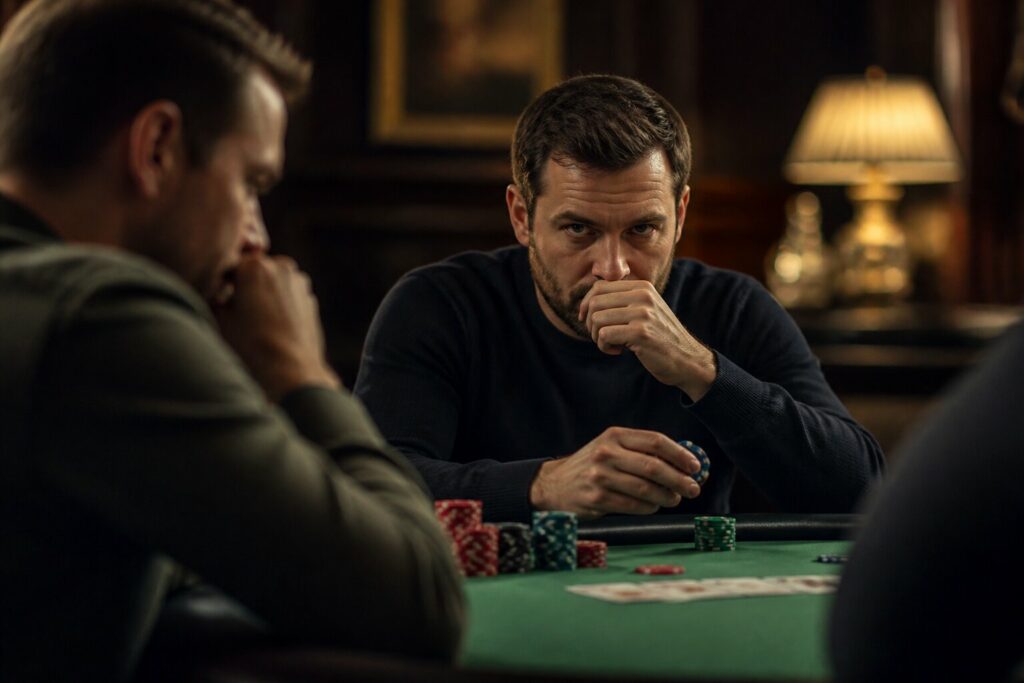
Every poker player remembers a call that changes the course of a game. Hero calling is about reading the full story of a hand and deciding, at the final moment, that your opponent is telling a false one.
It’s a high-stakes decision: when it succeeds it can be decisive, and when it fails the cost can be significant. Read on to learn what a hero call is, how to recognise the signs of a bluff, and how to make clearer decisions when the river forces a choice.
What Is a Hero Call in Poker?
A hero call happens when a player calls a bet on the final betting round with a weak or marginal hand because they believe the opponent is bluffing. The decision is based on the information available from the whole hand — the bets, the board, and how the opponent has acted — rather than on an instinctive guess.
Good hero calls are supported by a logical read: the caller has narrowed the opponent’s likely holdings to a group that contains many bluffs and few hands that beat them. Poorly judged calls are often the result of rushed thinking or emotional impulses and can cost more than a single hand.
This move is rare by design; strong players reserve it for moments when the evidence points clearly towards a bluff rather than treating it as a routine tactic.
How Bluff Catching Works in Poker Hands
Bluff catching is the practice of calling a bet with a hand that would lose to many of the strong hands but will beat the bluffs. It typically takes place on the river, once all cards are visible and the opponent’s final story is laid out.
A player who wants to catch a bluff mentally reconstructs the hand. They consider the range of hands the opponent could reasonably have shown through their betting. That range is compared to the caller’s own holding to judge whether the frequency of bluffs makes a call profitable.
This approach hinges on careful observation and calm evaluation. Rather than repeating guesses or relying on a single observation, successful bluff catching combines multiple clues—bet sizing, prior actions, board texture—into one coherent judgement.
If you want further reading on related strategy topics, our guides cover range construction and post-flop thinking in more detail.
See Our Top-Rated Online Casinos
Find the best online casino bonuses, read reviews from real players & discover brand new casinos with our list of recommended sites
Key Signs Your Opponent Might Be Bluffing
Spotting a bluff requires attention to detail. Players look for inconsistencies between the opponent’s words (their betting story) and the board.
Behavioural cues can matter: sudden changes in tempo, unusual talk, or gestures that differ from an opponent’s normal pattern. Equally important are betting patterns: an unlikely large bet from a typically cautious player or a sequence of actions that doesn’t fit the board are both useful red flags.
None of these signs are foolproof. Some players deliberately mix up their behaviour to mislead others. The most reliable reads come from combining behavioural observations with concrete betting evidence rather than treating a single “tell” as decisive.
Understanding Hand Ranges for Hero Calls
Thinking in ranges means considering all plausible hands an opponent could hold, based on how they’ve played through the hand. It’s a steadier approach than attempting to pinpoint one exact hand.
When evaluating a hero call, players mentally list the types of hands that would have bet or checked at each stage and weight how many of those hands are strong versus weak. For example, a final big bet on a dry board might come mostly from bluffs or from a narrow set of value hands; assessing that balance is the essence of range thinking.
Using ranges reduces reliance on hunches because it forces a player to account for frequency. It isn’t a guarantee, but it gives a clearer framework for deciding whether a call is mathematically sensible.
When Should You Make a Hero Call?
Timing a hero call requires patience and discipline. It is appropriate only when the evidence suggests that the opponent’s range contains enough bluffs to justify risking chips.
Useful signals include mismatches between the opponent’s earlier betting and their river aggression, or a board that offers few realistic value hands for the size of the final bet. Equally important is a sober assessment of your own position and bankroll: a call that would be marginal for one player might be poor sense for another if it jeopardises limits or composure.
Hero calls should be occasional, targeted plays rather than a habitual response.
Common Situations Where Hero Calls Happen
Hero calls are most frequent in heads-up pots on the river, where the final bet is large and the board is ambiguous. They also occur when an opponent has been loose throughout a session or when a line of play simply does not add up to a believable value hand.
For instance, if an opponent barely invested in the pot until the river when they suddenly shove, and the board offers few completed draws, the balance may tip toward a bluff-heavy range.
Factors to Consider Before Calling
Before committing chips, reflect on a few key questions:
- Does the opponent’s story match the board and earlier betting?
- What specific hands remain plausible for them, and how many of those are bluffs?
- Is a single call consistent with your bankroll and how you want to play long term?
Clear answers to these questions help separate disciplined calls from emotionally driven gambles.
Hero Call Myths: What Do Players Often Get Wrong?
Several misconceptions surround hero calls. Common myths include:
That frequent dramatic calls mark a superior player. In reality, elite players make them sparingly and only when the information strongly supports the move. Overusing dramatic calls usually signals poor judgment rather than skill.
That hero calls rely on bravery or instinct alone. Successful calls normally arise from careful, evidence-based thinking: reading betting patterns, considering ranges, and weighing stack sizes and pot odds rather than gambling on a hunch.
That pulling off a famous hero call should be a goal. While memorable, these moments are exceptions rather than the norm. They can create highlights, but they are not a reliable or repeatable source of long-term profit.
Good play tends to be steady and methodical rather than flashy. Focusing on sound fundamentals, correct decisions and consistent behaviour typically produces better long-term results than chasing high-risk plays for the highlight reel.
Remember that variance plays a large role in poker outcomes. Even well-founded hero calls can fail, and poor ones can occasionally succeed. Managing risk, maintaining discipline, and prioritising long-term decision quality are more important than seeking dramatic moments.
The Risks and Rewards of Hero Calls
The reward of a correct hero call is obvious: you win a pot you would likely have lost. But the risk is equally clear. Calling with a marginal hand frequently leads to needless losses if you misread the opponent’s range.
Hero calls are not shortcuts to profit. Overuse of this move can erode a bankroll quickly and invite exploitation by tougher opponents. The sensible approach is to treat hero calls as a tool to be used in carefully chosen spots, not a primary strategy.
Maintaining limits and clear decision criteria preserves both your bankroll and your ability to think clearly over long sessions.
Popular Hero Call Examples in Poker
Televised poker has given us striking examples where players called large bets with very thin hands and were vindicated. These memorable moments show how patience, timing and psychological insight can come together to produce dramatic results.
Those hands also illustrate how two factors often interact: a well-built read on the opponent and a correct assessment of range imbalance. Getting both elements largely right is what allows a hero call to work more often than not.
However, these examples are highlights, not a blueprint. Many hero calls fail in identical-looking situations because subtle details differ. Those differences can include:
- the opponent’s tendencies and recent behaviour
- the action earlier in the hand that shaped ranges
- small changes in bet size that alter pot odds and folding incentives
Other factors that affect the decision include blocker effects, table image and simple variance, so what worked once may not work again in the same spot.
Studying concrete examples can help you recognise useful patterns, but every spot requires its own careful evaluation. Always play within your limits and treat televised hands as learning tools, not guaranteed roadmaps.
Top Tips for Mastering Bluff Catching
Bluff catching improves with patient observation and structured thinking. Focus on how opponents normally behave and note when that behaviour changes. Practice framing an opponent’s range rather than guessing a single hand, and weigh the frequency of bluffs against the cost of a mistaken call.
Bet sizing is a useful clue: a size that would normally represent a value hand in one context can be a bluff in another. Keep your reactions measured; emotional plays almost always reduce long-term effectiveness.
Work on these elements gradually. Over time your ability to separate good bluff-catching spots from poor ones will improve.
Mistakes to Avoid When Attempting Hero Calls
Common errors include:
- Calling too often without sufficient evidence, which dilutes the effectiveness of a genuine read and makes you easier to exploit.
- Letting frustration or previous losses dictate choices; emotional decisions increase the risk of poor calls.
- Copying memorable calls seen on TV without accounting for the full context, such as table dynamics, player tendencies and stack sizes.
- Failing to consider position, hand ranges and the entire betting sequence before committing chips.
Bankroll neglect is also a frequent pitfall. Risking too much on a single read not only endangers your funds but also impairs your ability to make clear decisions later in a session. It is sensible to size wagers relative to the risk and your overall bankroll so one call does not cause undue stress or ruin your plan.
Another common mistake is ignoring opponents’ adjustments after you make a famous call. Experienced players will adapt if they see a pattern in your actions, so failing to vary strategy or recognise counter-adjustments can be costly. Equally, confirmation bias and overconfidence after a successful hero call can lead you to overestimate the accuracy of your reads.
Avoid these missteps by prioritising calm, information-based decisions and steady bankroll management. Regularly review hands to learn from errors and stay disciplined about both sizing and situational context.
How Hero Calls Can Impact Your Poker Image
The way you play influences future action against you. A successful hero call can make opponents think twice before bluffing, which can be an advantage at the table. It can also win you large pots and build a reputation for careful observation and courage.
Conversely, if you call too often and are wrong, others will exploit that tendency. Repeated incorrect hero calls will label you as overly loose or “sticky,” and opponents will adjust by value-betting more and bluffing less. That adjustment can erode your edge over time.
Building a balanced image means mixing credible lines and avoiding predictable behaviour. Consider a single high-variance call in the context of your overall strategy: does it complement your range analysis, or does it create an obvious leak that others can target?
Before making a hero call, think about the practical factors that affect your image and results:
- opponent tendencies and how they view you
- pot and stack sizes, and the financial risk involved
- recent table history and whether your action fits the story you have been telling
Keeping these points in mind helps you make calls that are not just emotionally satisfying but strategically sound, while protecting your longer-term profitability and reputation.
Summary: Should You Add Hero Calls to Your Game?
Hero calls are a powerful but specialised tool. They can win large pots in the right circumstances, but they also carry meaningful downside when misjudged. Incorporating them into your play should be a deliberate choice based on careful observation, range analysis, and respect for your financial limits.
If you decide to use hero calls, do so sparingly and with a clear rationale. Keep refining your reads, manage your bankroll sensibly, and let disciplined decision-making guide you rather than the allure of dramatic moments.