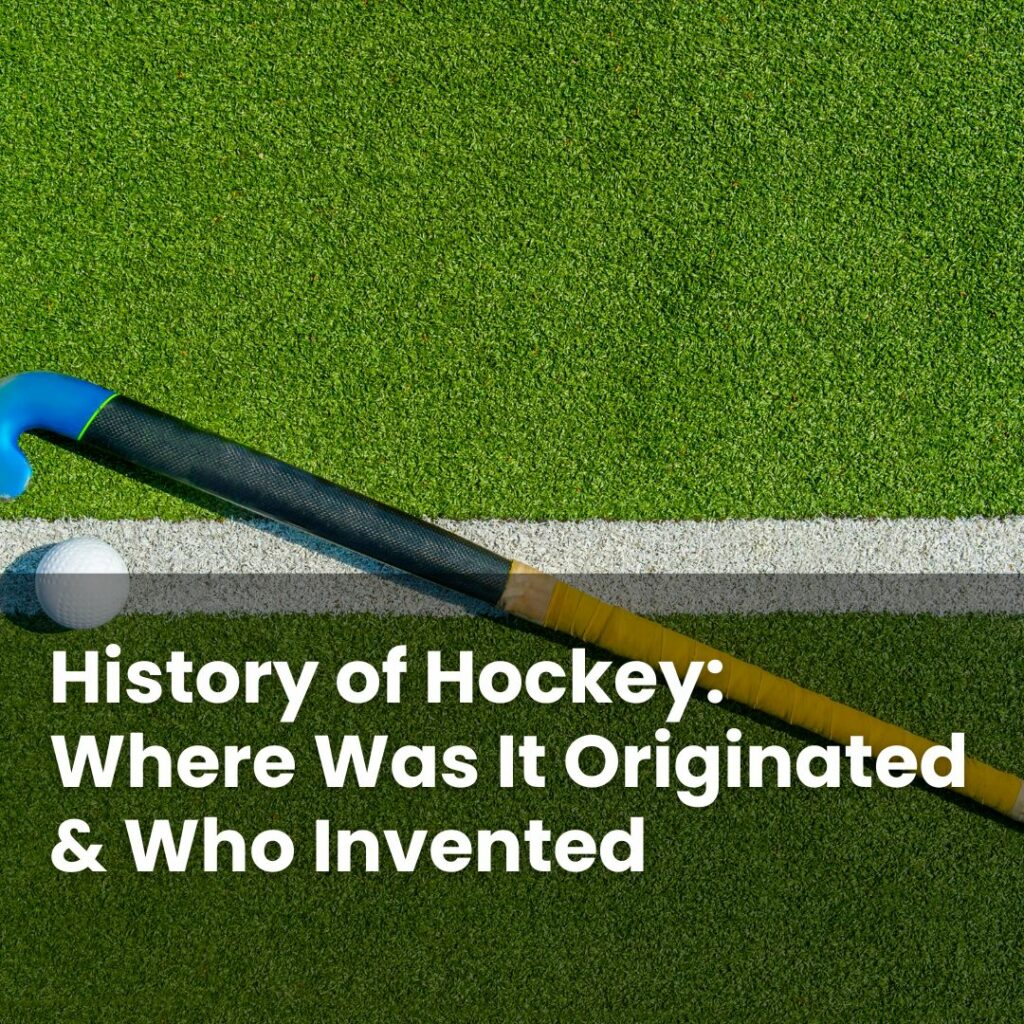
Have you ever watched a hockey game and wondered where it originated? The sport’s roots reach far beyond icy ponds and snow-covered fields, and its history is more complex than it may appear.
Over centuries, communities across the world shaped stick-and-ball pastimes with their own rules, equipment, and styles. Gradually, these activities converged into the sport we recognise today, combining local traditions with shared standards.
Whether you’re new to hockey or a long-time supporter, following its history from informal village games to organised competition provides context for what you see on the pitch. It also shows how cooperation and thoughtful rule-making supported the game’s development.
Where Did Hockey Originate?
The true beginnings of hockey are difficult to pin down, as similar stick-and-ball games were played in many cultures. Records show people in ancient Egypt and Greece using curved sticks with a ball, while Roman games bore clear resemblances.
Comparable pastimes appeared in East Asia and among Indigenous peoples in various regions, each with distinctive sticks, playing surfaces, and customs. The details varied, but the core idea of guiding a ball with a stick was already there.
In the UK, a game known as “hockie” appears in medieval references. Villagers played on frozen ponds in winter and on grass in warmer months. It could be chaotic, with few boundaries and little agreement on rules, yet it was a social occasion that brought people together and filled calendars around local fairs and feast days.
By the 19th century, hockey began to take a clearer shape in Britain. Public schools such as Eton and Harrow helped formalise play, and one of the earliest documented hockey clubs, Blackheath Hockey Club, was founded in London in 1861.
From there, momentum built. Standardised rules began to appear, making it easier to schedule matches, compare teams, and establish regular competitions that spectators could follow with confidence.
As the sport spread, the British Empire introduced hockey to places like India and Australia, where it took on strong local identities. With these foundations in place, one question naturally follows: if many places played a part in its early days, who actually invented it?
Who Invented Hockey?
There is no single inventor of hockey. Instead, the sport evolved gradually as communities adapted their own games and then drew closer together through clubs and competitions. That slow, collective process explains why no single person is credited as an inventor, unlike in other fields.
In the UK, schoolboys at institutions like Eton and Harrow influenced the early rules and equipment used on grass. As noted earlier, clubs such as Blackheath provided structure, fixtures, and a platform for agreement on how the game should be played.
The real leap came through organisation. Committees and club representatives met to establish common rules, aligning everything from pitch markings to what counted as a foul. Local associations compared notes, circulated written laws, and refined them after match experience.
As national and, later, international bodies emerged, their guidance ensured that tournaments could be run fairly and consistently. It was a group effort, and that collaboration is what made hockey stable enough to spread and thrive.
With the idea of a single inventor set aside, it is easier to see how different places helped shape the sport’s character as it grew, each adding tactics, techniques, and coaching practices that influenced the wider game.
Key Regions That Influenced Hockey’s Growth
Several regions added their own imprint as hockey developed into a recognised sport.
In Britain, towns and schools anchored the early hockey club scene. London and Kent hosted some of the first organised matches on grass pitches, and these local traditions encouraged clearer rules and coordinated team play. County competitions helped set standards that others adopted.
In India, hockey flourished after its introduction in the 19th century. Schools and the armed forces played a central role in growing participation, and Indian teams later became known for tight control, deceptive dribbling, and fast attacking moves.
That approach influenced coaching and tactics far beyond the subcontinent, inspiring training methods that emphasised first touch, stickwork, and passing triangles under pressure.
Australia embraced the sport with energy, building strong state competitions in places such as Western Australia and New South Wales. A focus on fitness, pressing, and structured play helped lift the standard and supported long-term international success.
Canada contributed through the development of ice hockey. Cold winters and frozen lakes made it natural to adapt stick-and-ball games to ice, creating a variation of hockey that has evolved independently.
Across Europe, nations including the Netherlands refined club systems and coaching methods, adding tactical depth that shaped modern field hockey. High-tempo ball circulation, zonal structures, and specialised penalty-corner routines set benchmarks adopted worldwide.
As the sport matured in these settings, the need for consistent rules became impossible to ignore, paving the way for formal bodies and universal laws.
How Did Hockey Develop Into Its Modern Rules?
Early games had few shared standards, which meant plenty of disagreements. Clubs in England began to write things down in the mid-1800s, setting out how many players should take part, where the boundaries lay, and what equipment was acceptable.
That groundwork made competition fairer and more predictable. It also enabled clubs to travel and play one another, confident they were following the same expectations.
A major step came in 1886 with the creation of the Hockey Association in London. Representatives from clubs and schools agreed on a single rule set covering restarts after goals, restrictions on using hands and feet, and how umpires should judge fouls.
From that point, rule changes tended to be coordinated and widely adopted. Emerging international federations supported consistency across borders and helped competitions run smoothly.
As hockey grew faster and more tactical, adjustments followed. Offside was gradually removed to open up play, free hits were refined with the self-pass to keep the game moving, and interpretations of obstruction and stick use aimed to reduce dangerous contact.
Penalty corners and penalty strokes were clarified to address scoring opportunities and fouls in the circle. Protective equipment for goalkeepers improved safety, rolling substitutions maintained intensity, and at the elite level, video referral added a layer of accuracy to key decisions.
The move from natural grass to artificial pitches in the late 20th century changed the texture of the sport. A smoother surface encouraged quicker passing and tighter control, which, in turn, prompted further tweaks to maintain the balance between attack and defence.
Taken together, these developments show a sport that adapts while retaining its essential character. Players, officials, and administrators continue to review the laws so that hockey remains safe, fair, and enjoyable to watch.