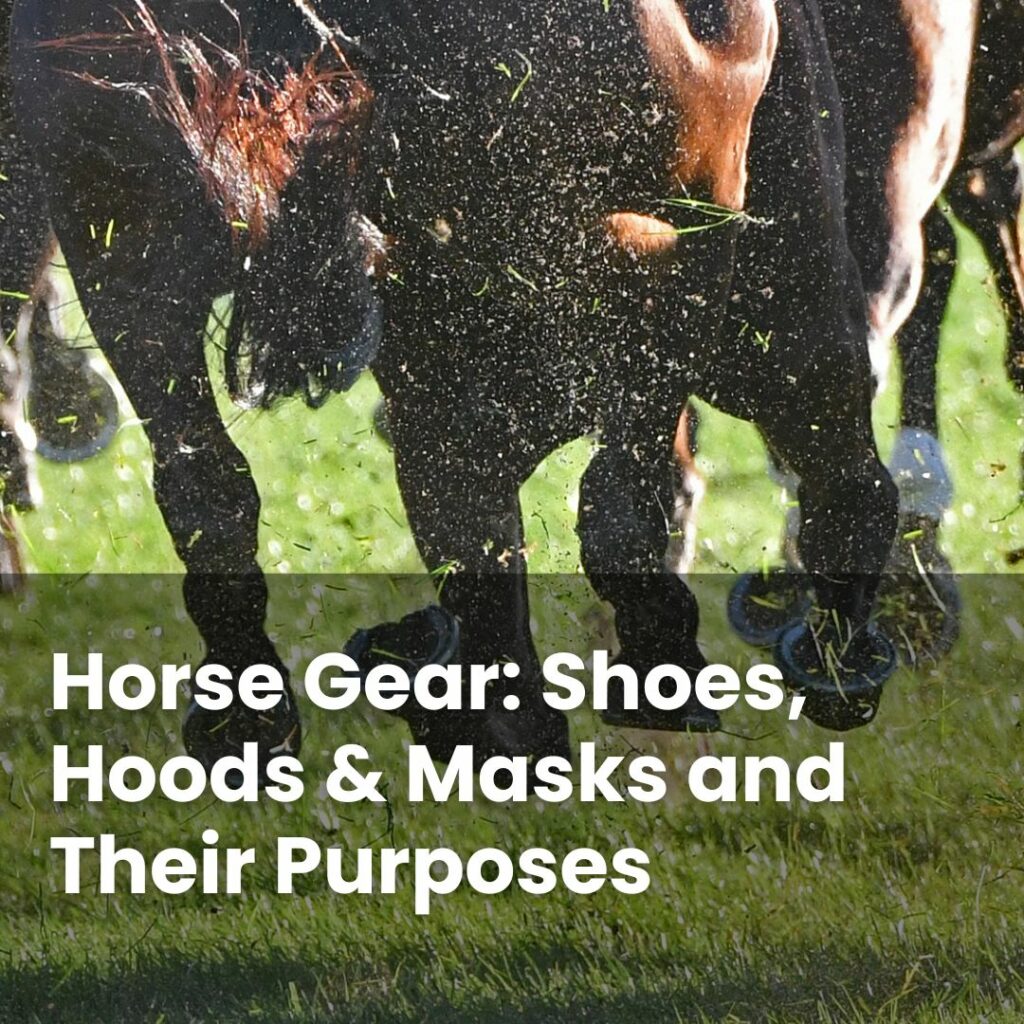
Horses wear a variety of gear during training, work, and racing. Each item serves a purpose, whether it relates to comfort, behaviour, or the environment.
Some equipment may look unusual to newcomers—especially hoods and masks—but each has a practical role, even if that role isn’t immediately obvious.
This article explores why horses wear shoes, the different types of hoods and masks, and the meaning of a red hood, helping the kit feel less mysterious and more purposeful.
Read on to learn more.
Why Do Horses Wear Hoods?
Hoods cover part of a horse’s head and ears and may help in busy or noisy settings. Horses are naturally sensitive to sound and movement, which can make crowded environments challenging. A hood might reduce these effects, allowing the horse to remain calmer.
Some hoods are thicker around the ears, altering how sound reaches the horse. Others slightly adjust what the horse sees, which may limit distractions in bustling surroundings.
Hoods can also offer basic physical protection. For example, they may shield sensitive areas from insects, cold air, or friction. In stables, hoods might help keep a horse’s mane tidy or prevent rubbing.
In some situations, hoods may be used to support recovery from minor skin issues, typically under the guidance of a vet or experienced professional.
Headgear is only part of the picture—what a horse wears underfoot is equally important.
Types Of Horse Hoods And Their Functions
Hoods come in several styles, each suited to particular situations or individual needs:
- Full Hoods: These cover most of the head and sometimes part of the neck. While they may look like they are just keeping the horse clean, some full hoods also slightly reduce sound or visual distractions.
- Ear Covers (Ear Hoods): These focus on the ears and may make noisy environments less startling. Some designs are lightly padded, while others are thinner—different options influence how much sound is filtered.
- Blinkers: Fitted beside the eyes, blinkers narrow the horse’s field of vision. This subtle adjustment encourages the horse to look ahead rather than react to nearby movement.
- Sheepskin Cheek Pieces: Attached to the bridle, these slightly limit side vision. Unlike full blinkers, the effect is gentler, and the soft material helps prevent rubbing.
Each hood is selected based on the horse’s needs, temperament, and the activity it is performing.
Why Do Horses Wear Shoes?
Hooves naturally wear down over time, but domestic horses often move on surfaces harder than grass. Shoes act as a barrier between the hoof and the ground.
Beyond basic protection, shoes may influence how a horse moves. Small adjustments in shape or positioning might redistribute weight or support certain movements. In some cases, shoes may be part of managing an injury or physical condition, under advice from a vet or farrier.
Not all horses need shoes, and some do well barefoot depending on workload, hoof condition, and environment.
See Our Top-Rated Online Casinos
Find the best online casino bonuses, read reviews from real players & discover brand new casinos with our list of recommended sites
Different Types Of Horse Shoes And When They’re Used
Shoes are made from a variety of materials and designs, each affecting the horse differently:
- Steel Shoes: Strong and durable, often used for horses working regularly on hard surfaces.
- Aluminium Shoes: Lighter than steel, these may subtly influence movement by reducing limb weight. They might wear down more quickly and require more frequent replacement.
- Plastic or Rubber Shoes: These may provide cushioning for sensitive hooves and are sometimes combined with metal inserts for support.
- Therapeutic Shoes: Specialist shoes, such as heart-bar or wedge types, are used under veterinary and farrier supervision to address specific hoof or limb concerns.
Matching the shoe to the horse’s needs helps support comfort and movement without forcing behavioural changes.
Why Do Horses Wear Masks?
Masks protect the face and eyes from insects, dust, and sunlight. They also help prevent irritation and maintain health.
Most are made of lightweight mesh that sits slightly away from the eyes, allowing the horse to see clearly while reducing contact with sensitive areas. Some extend to the ears or muzzle for extra coverage.
Certain masks include UV-filtering material, which may reduce exposure for horses with pale skin, particularly around the eyes and nose.
Specialist masks can also alter what the horse sees. For example, visors slightly restrict rear vision, encouraging the horse to look forward without fully limiting sight.
What Are Red Hoods Used For?
A red hood is a type of racing headgear used mainly in British and Irish racing. Its main purpose is identification: it shows that the horse is wearing earplugs.
Earplugs reduce sound inside the ears, which may benefit horses that are sensitive to noise or become excitable before a race. Jockeys can remove the plugs if necessary, changing how much sound the horse experiences during the race.
The red colour itself is not related to performance. Racing authorities use it to differentiate between types of headgear for stewards, commentators, and other race monitors. Not all horses wear earplugs or a red hood—trainers make decisions based on the horse’s previous behaviour and reactions to race-day conditions.
If you choose to bet on horse racing, set clear limits, only stake money you can afford to lose, and seek support early if you feel concerned. Free, confidential guidance is available from GamCare and GambleAware.
Understanding why horses wear shoes, hoods, and masks shows that each piece of equipment is selected to support the horse’s welfare and performance. What might look like a collection of accessories is actually a considered toolkit for daily work and competition.