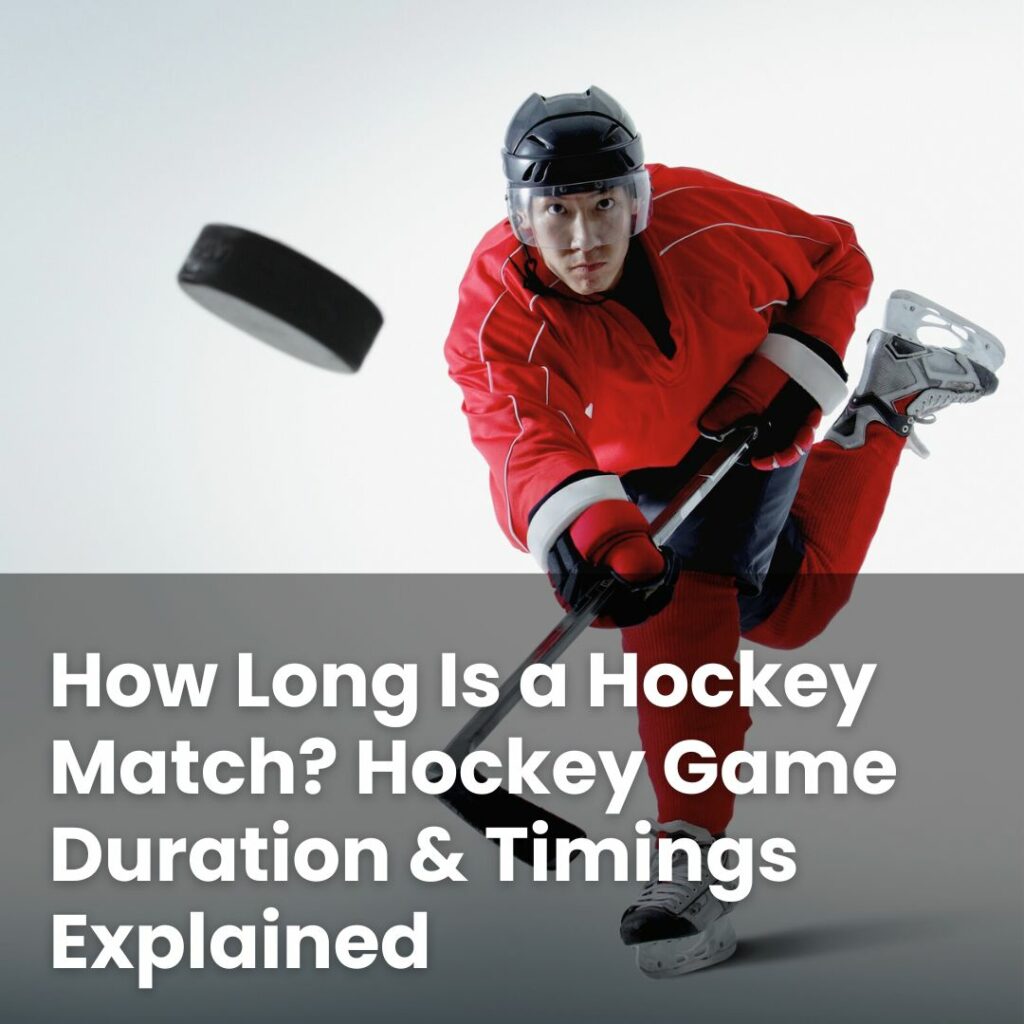
Hockey timings can feel simple on the surface, but the rules shift slightly from league to league. From professional fixtures to youth games, a few core regulations decide how long the action lasts.
What you see on the scoreboard is only part of the story. Intermissions, stoppages and video reviews all affect the total time, and if scores are level, overtime or a shootout can add more minutes.
This guide breaks down how different leagues structure their games, compares regulation time with the real time you will spend watching or attending, and explains the common delays that can crop up. If you are planning to place a bet, it helps to know how long a match can run and to stick to limits that suit you.
How Long Is a Standard Professional Hockey Match?
A standard professional hockey match usually lasts 60 minutes of playing time, split into three periods of 20 minutes.
Between each period, there is an intermission of around 15 to 20 minutes for player recovery and ice resurfacing. The clock runs only during active play, so stoppages for penalties, the puck leaving the ice, injuries or officials’ whistles pause the timer until the face-off restarts play.
From arrival to the final horn, a typical match without overtime takes roughly two to two and a half hours. The exact duration depends on how many stoppages, reviews or other interruptions occur.
That is the baseline many competitions follow, but some leagues tweak the format.
What Are Period Lengths in Different Leagues?
Period lengths are set by each competition, so you will see small differences across professional, international and youth levels.
NHL
NHL games use three periods of 20 minutes of actual play in both the regular season and the playoffs. Intermissions separate the periods for ice maintenance and rest. In televised games, short media timeouts are added within each period, which do not change the official clock but can extend the real time you spend watching.
IIHF and Olympic Hockey
International matches under IIHF rules and at the Olympic Games also use three periods of 20 minutes. While some rules differ from the NHL, the overall timing structure mirrors it to keep tournaments consistent.
Junior and Youth Leagues
Junior and youth leagues often shorten periods to suit player development and scheduling. Many use three periods of 15 to 20 minutes, and in younger age groups, periods can be 12 or 15 minutes. Some competitions use running-time rules in parts of a game to keep events on schedule, switching to stop-time for the final minutes or close situations.
With those formats in mind, it helps to separate the official clock from the time you will actually spend at the rink or in front of the TV.
See Our Top-Rated Online Casinos
Find the best online casino bonuses, read reviews from real players & discover brand new casinos with our list of recommended sites
Regulation Time Versus Actual Clock Time
“Regulation time” is the 60 minutes recorded on the scoreboard in most professional leagues. It is the basis for official records and statistics.
The “actual clock time” from the opening face-off to the end is longer because the game clock is paused whenever play stops. Intermissions and team timeouts also add minutes. For most fixtures without overtime, you are generally looking at around two hours or a little more, depending on the tempo of the game and the number of stoppages.
So, what does that mean in practice once you add everything up?
How Long Is a Hockey Match in Real Time With Intermissions and Stoppages?
Because of intermissions and routine pauses, a standard 60-minute game usually takes around two to two and a half hours in real time. Two intermissions of 15 to 20 minutes account for a sizeable portion of that. Face-offs after icings, goals and penalties add short gaps, and game reviews or injury stoppages can extend the evening further.
A clean game with few reviews often finishes closer to the two-hour mark. A game with several penalties, coach’s challenges or equipment checks can run longer, especially if there are ceremonies or broadcast commitments before or after the action.
And if the scores are level after three periods, there is more to come.
How Long Do Overtime Periods And Shootouts Last?
Overtime and shootouts decide a winner when a match is tied after regulation, and the format varies by league and stage of competition.
In the NHL regular season, overtime is a single five-minute period, usually played three versus three. It is sudden death, so the first goal ends the game. If still tied, the match moves to a shootout where players take turns one on one with the goalkeeper. Shootouts start with three attempts per side and continue with additional rounds if needed.
In the NHL playoffs, overtime periods last 20 minutes at full strength and continue until a goal is scored, with no shootouts. Many international events use a shorter overtime before a shootout in group stages, then longer sudden-death overtimes in later rounds.
Even without extra time, there are other stoppages that can stretch a game.
How Do Video Reviews, Penalties And Other Delays Affect Game Length?
Video reviews help officials confirm goals, offsides and goaltender interference. These checks improve accuracy but can add several minutes, particularly when angles are tight or when both the on-ice and central review teams are involved.
Penalties do not stop the clock once play restarts, but the sequence around a call does: the whistle, the discussion among referees, and the organisation of players for the face-off. Frequent penalties slow the rhythm, which naturally lengthens the evening.
Other delays are part of the sport. The ice may need quick repairs, a goal can become dislodged, equipment such as a broken stick or skate blade must be sorted, or an injured player may require attention. Each is a small addition, but over a full game, they can add up.
With all that in mind, planning a little buffer makes sense whether you are heading to the arena or settling in at home.
How Much Time Should I Allow To Watch Or Attend A Hockey Match?
For most professional fixtures, allow about two to two and a half hours from the scheduled start to the final horn, with a little extra if overtime or a shootout is possible. If you are attending in person, add time for travel, entry checks, queues and leaving the venue afterwards. TV broadcasts can run longer than the game itself due to pre-match build-up and post-game analysis.
If you plan to place a bet, set personal limits, keep stakes affordable and take breaks if the event runs long. If gambling starts to affect your well-being or finances, free and confidential help is available from organisations such as GamCare and GambleAware.
Plan for the game to last up to two and a half hours, leave room for the unexpected, and you will be well prepared from puck drop to the final whistle.