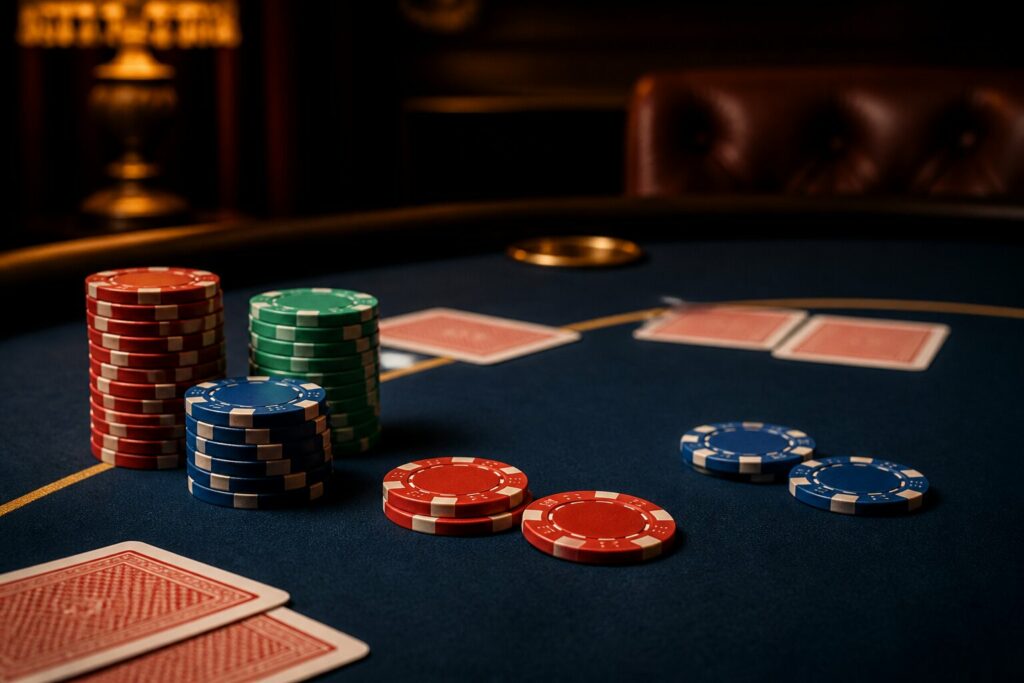
If you’re new to poker or looking to brush up on the basics, understanding the difference between antes and blinds is a great place to start. These two elements shape the action at any poker table and affect how hands are played and who contributes to the pot.
They may sound similar, but antes and blinds serve distinct purposes and change the incentives facing every player. Read on for clear explanations and practical examples that make it easy to tell them apart.
Curious about when you’ll pay an ante instead of a blind, or what each one means for your betting decisions? The sections below cover the definitions, real-game use and common misconceptions so you can spot the difference at a glance.
What Is an Ante in Poker?
An ante is a small compulsory bet that every player at the table places before a hand is dealt. Because everyone contributes, the pot starts off already containing money and that influences how players approach the hand.
Tournaments commonly use antes, and some cash games adopt them as stakes rise. The ante amount is usually modest compared with the minimum bet, so it nudges action without draining chips quickly. For example, in a table of six players with a 50p ante, the pot begins with £3 even before cards are shown, which makes folding every weak hand slightly more costly.
Antes create an environment where more hands have value and encourage competitive betting from the outset, something that changes the tactical shape of a session as blinds and antes increase.
What Are Blinds in Poker?
Blinds are compulsory bets posted by two players at the start of each hand. The small blind sits immediately left of the dealer and the big blind sits to the left of the small blind, with the big blind usually double the small blind.
Only those two positions pay blinds each hand, but the dealer button—and therefore the blind positions—rotates clockwise after every deal so everyone takes turns. Blinds set the minimum stake for the first round of betting and force chips into the pot without everyone contributing every time.
In common formats such as Texas Hold’em and Omaha, the blind structure is central to how hands unfold: players must factor in the position of the blinds when deciding whether to enter a pot, call, or raise.
See Our Top-Rated Online Casinos
Find the best online casino bonuses, read reviews from real players & discover brand new casinos with our list of recommended sites
How Do Antes and Blinds Work in Real Games?
Both antes and blinds ensure there is money in the pot at the start, but they affect table dynamics differently. Blinds concentrate the initial contribution into two players per hand and create positional pressure; antes spread a small cost across the whole table, increasing everyone’s incentive to play for a pot.
Some games combine both systems, especially in later tournament stages, which accelerates action and forces shorter-term decisions. In a cash game with blinds only, players can sit out hands without paying anything unless they are in the blind positions; with antes in place, every player shares in the cost of each hand, which reduces the attractiveness of folding frequently.
Whether live or online, the specific betting structure shapes strategy, so it’s worth checking the house rules before you sit down.
Key Differences Between Antes and Blinds
The clearest distinction is who pays: antes are paid by every player, blinds are posted by just two players each hand. Blinds are positional and rotate; antes are collected uniformly from the whole table.
Blinds often determine the minimum bet sizes for the round and tend to be larger than antes. Antes, being smaller, primarily serve to top up the pot and make each hand meaningful. Some formats use one or the other, and some use both, depending on the game type and the stage of play.
Understanding this difference helps when you’re adapting your betting approach across formats and table positions.
Why Do Poker Games Use Antes or Blinds?
Both mechanisms force money into the pot so players have an immediate incentive to contest hands. By requiring a contribution up front, they discourage excessively passive play and keep the game moving at a steady pace.
Blinds and antes have different effects on how the game feels and how players make decisions. In particular:
- Blinds introduce positional tension because the players posting them must act first in later betting rounds, which can make those seats harder to defend and influence short-term tactical choices.
- Antes produce a shared cost that nudges everyone toward involvement, since every player has already invested a small amount and therefore has slightly more incentive to see a flop or continue in a hand.
In tournament play organisers commonly increase antes as blinds rise. This compresses stack sizes in relation to the forced bets and helps:
- shorten play by encouraging more frequent all-in or fold decisions,
- create moments where aggressive play is rewarded,
- move the event toward decisive action as the tournament progresses.
These features shape both short-term tactics and long-term tournament strategy. Players adjust their risk tolerance, hand selection and positional awareness in response to the structure, and good decision making includes managing chips with those forced bets in mind. Play responsibly and be aware of the risks involved.
Which Poker Variants Use Antes or Blinds?
Different poker variants adopt different betting structures, which affect how hands are played and how chips move around the table.
- Texas Hold’em and Omaha typically use blinds. This structure places forced bets on the two players to the left of the dealer and makes position and blind-stealing common strategic themes.
- Stud variants, such as Seven Card Stud, traditionally employ antes so that every player has a stake in each deal and the pot grows from the start.
- Mixed games will follow the rules of the specific game being dealt at the time, so the use of antes or blinds can change within the session.
Tournaments commonly introduce antes in later levels while keeping blinds active throughout, combining the effects of both to increase action and ensure the game progresses. The exact mix and timing depend on the house or tournament organiser’s structure, so it is useful to check the posted blind and ante schedule before you join a game.
Examples of Antes and Blinds in Action
To make this concrete, picture a six-handed Texas Hold’em table. The player immediately left of the dealer posts a £1 small blind; the next player posts a £2 big blind. Those bets create an initial pot and set the minimum for raises in the first betting round.
Contrast that with a five-player Seven Card Stud game carrying a 50p ante. Each player pays 50p, so the pot begins at £2.50. That sum makes marginal calls less appealing and encourages more players to compete for the pot from the first deal.
Some tournaments combine both: each player might place a small ante, while two players still post the blinds. Those combined stakes noticeably increase the cost of folding repeatedly and push the action along.
Common Misconceptions About Antes and Blinds
There are a few misunderstandings that can trip up newer players. One is thinking games never mix both systems—many tournaments and some cash formats do. Another mistake is assuming everyone pays a blind; in fact only two players post blinds each hand while antes, if present, come from all players.
Values for antes and blinds vary by game and stage; they aren’t fixed across poker. Finally, these compulsory bets are mandatory under the rules when they apply, not optional contributions.
When in doubt about a specific table, check the posted structure so you know whether antes, blinds, or both are in play.
Summary of Poker Ante vs Blind
The key distinctions between antes and blinds centre on who pays, how they affect position, and the way they shape betting behaviour. Antes are paid by every player and increase the starting pot; blinds are posted by two rotating positions and set the initial bet size. Some games use one system, some use both, and the chosen structure influences tactical choices at the table.
Before taking a seat, make sure you understand the table’s betting rules. Finally, keep your play within set limits and seek support if gambling becomes a problem — there are independent resources available to help.