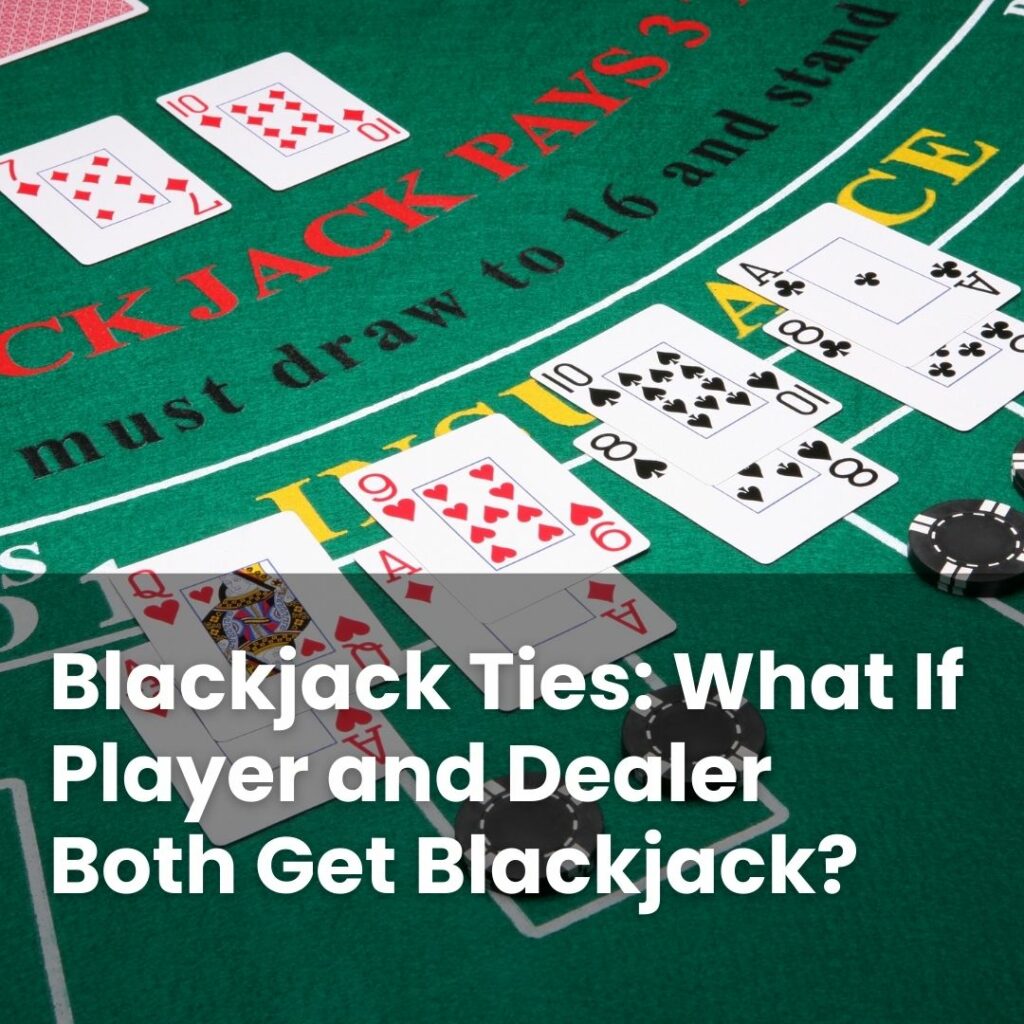
Blackjack is easy to learn, but a few situations can raise questions. One of the most common is when both the player and the dealer start with blackjack. What happens then?
This blog post explains how ties work, what “natural blackjack” and “push” mean, and how insurance, side bets, split hands, and rule variations affect the outcome.
Knowing these points helps make sense of the table decisions and keeps expectations realistic. Only play with money you can afford to lose.
What Is A Natural Blackjack?
A natural blackjack is the strongest starting hand. It is an ace with any ten-value card in the first two cards dealt, giving a total of 21.
In most games, a natural blackjack wins immediately unless the dealer also has a natural. When it wins, it usually pays more than a standard winning hand. A common payout is 3:2, although some tables use different payouts.
That idea brings us neatly to what happens when scores finish level.
What Does A Push Mean In Blackjack?
A push is a tie. It happens when the player and the dealer end a round with the same total, whether that is 21 or any other matching number.
In a push, the original stake is returned and there is no win or loss on the hand. The player can then choose what to do with that returned stake in the next round.
With that in mind, what if both hands start with 21 from the first two cards?
See Our Top-Rated Online Casinos
Find the best online casino bonuses, read reviews from real players & discover brand new casinos with our list of recommended sites
What Happens When Player And Dealer Both Get Blackjack?
If both receive a natural blackjack, the result is a push in most games. No one wins or loses, and the player’s original bet is returned.
In “hole-card” games where the dealer checks for blackjack when showing an ace or a ten-value card, this push is confirmed straight away. In “no-hole-card” games, the dealer reveals their entire hand later, but the outcome for two naturals is still a tie.
If you are considering the separate insurance bet in this situation, the next section explains how it is settled.
Does Insurance Pay If Dealer And Player Both Have Blackjack?
Insurance is an optional wager offered when the dealer’s upcard is an ace. It pays 2:1 if the dealer does, in fact, have blackjack, and it is settled independently of the main hand.
If both the player and dealer have blackjack, the main hand pushes and the original stake is returned. The insurance bet, however, pays because it only cares about the dealer’s cards. For example, with a £10 main bet and £5 insurance, a simultaneous blackjack would usually return the £10 stake and pay £10 for the insurance win.
Insurance is always separate from the result of the main hand, which leads neatly to other side bets.
What Happens To Side Bets When Both Have Blackjack?
Side bets are optional wagers that sit alongside the main hand. Popular examples include Perfect Pairs and 21+3, and each has its own rules.
If both player and dealer have blackjack, side bets are still settled on their specific criteria. A Perfect Pairs bet pays if the player’s first two cards form a pair, regardless of the dealer’s result. In 21+3, payouts depend on combinations formed by the player’s first two cards and the dealer’s upcard.
The main hand result, whether win, loss, or push, does not change how a side bet is paid. Each follows the payout table shown on the game.
How Are Split Hands And Blackjacks From Split Aces Treated?
Splitting lets a player turn a pair into two separate hands. This often comes up with pairs of aces or tens.
After splitting aces, most tables deal one additional card to each new hand. If an ace is followed by a ten-value card, that makes 21. However, this 21 is usually not treated as a natural blackjack. It is typically paid at the standard 1:1 if it beats the dealer, and it does not receive the enhanced natural payout. It also does not automatically tie a dealer’s natural; if the dealer has a natural blackjack, a 21 made after a split usually loses.
Does A Blackjack From A Split Count As A Natural?
No. A 21 made after a split, including from split aces, is generally counted as a regular 21 rather than a natural blackjack. It is normally paid at standard odds and does not qualify for the higher natural payout unless the table rules explicitly say otherwise.
Checking the table’s rules before playing helps avoid surprises, especially around split aces and payout terms.
Rule Variations That Affect Blackjack Ties
While a tie usually results in a push, some variants use different rules. A few tables specify outcomes such as “dealer wins ties,” which means a tied total would lose for the player. This is uncommon but does exist.
Another difference is whether the dealer takes a hole card at the start or not. Hole-card games identify a dealer blackjack immediately when the upcard is an ace or a ten-value card. No-hole-card games reveal the dealer’s hand after player actions are complete. In both cases, two naturals typically push, but timing and how other bets are affected can vary.
Reading the on-table rules or game help page is the simplest way to know how ties, naturals, and any special cases are handled.
How Do Online And Live Dealer Games Handle Simultaneous Blackjacks?
Online and live dealer blackjack generally follow the same core rules as in-person tables. When both the player and the dealer start with blackjack, the result is usually a push and the original stake is returned.
Platforms make the outcome clear on screen, and balances update automatically. Live dealer tables also announce the result and show it visually, so players can follow along easily. If a table uses an unusual rule, the help or info section will state it.
Play Casino Games Online
If you are thinking about trying online casino games, choosing a trusted site is the sensible first step. At Best Casino HQ, we maintain a page that highlights options we have reviewed for security, fairness, game selection, and ease of use, so you can compare and pick what suits your preferences.
Whether you prefer classic tables, live dealer rooms, or a broad mix of slots, you can browse and find a site that feels right. If you decide to play, set personal limits that fit your circumstances and keep it occasional. If gambling starts to affect your well-being or finances, support from organisations such as GamCare and GambleAware is free and confidential.
Understanding how ties and naturals work means there are fewer surprises at the table, letting you focus on enjoying the game on your terms.