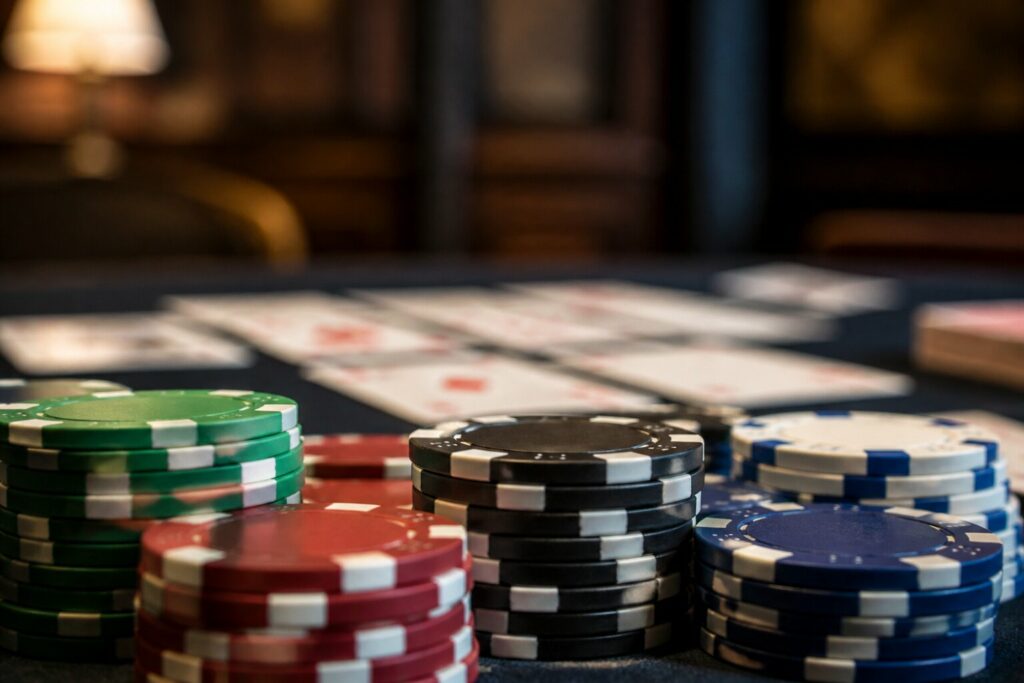
Ever stumbled across the term “brick” while watching a poker stream or chatting with mates at the table? It’s one of those bits of poker slang that sounds odd at first but comes up time and again.
Knowing what players mean when they mutter “brick” can make hands much easier to follow and help you understand how the action is likely to unfold.
Read on to find a clear explanation of the term, examples from common game situations, and related vocabulary that will help you keep up at the table.
What Is a Brick in Poker?
In poker, a brick is a card that appears on the board but doesn’t help any player’s hand or the draws that have been made. Think of it as a card that neither completes a straight nor a flush, nor improves a likely pair or set — it simply fails to change the balance between players.
For example, in Texas Hold’em if the flop is J♦ 10♦ 4♠ and some players are chasing a queen or a diamond to complete a strong draw, a 2♣ on the turn is a brick: it doesn’t help the made hands or the draws. The same idea applies in Omaha or Seven Card Stud: whenever a dealt card adds no meaningful chance of improving anyone’s hand, it’s commonly called a brick.
Recognising bricks is useful because they clarify the board’s story and narrow down what hands opponents might still be representing.
How Does a Brick Affect Gameplay?
When a brick lands, the immediate effect is often a slowdown in betting. Players who were depending on a specific rank or suit to arrive see their outs unaffected, so they reassess whether to commit more chips. Conversely, a player with a relatively strong hand may feel more comfortable checking or calling rather than risking a large bet.
Bricks also influence bluffing and betting patterns. Some players seize the moment to apply pressure after a brick, representing that their hand was actually improved. Others adopt a defensive posture, preferring to see one more card or concede the pot. How a brick changes the dynamics depends on stack sizes, position, prior action and table image — in short, the practical context matters more than the card itself.
Understanding these subtleties helps you interpret opponents’ reactions and decide whether to press an advantage or step back.
See Our Top-Rated Online Casinos
Find the best online casino bonuses, read reviews from real players & discover brand new casinos with our list of recommended sites
Common Situations When a Brick Appears
Bricks can show up at the flop, turn or river, and each stage affects the hand differently. On the flop, a brick might blunt multiple draws at once; on the turn it often seals a likely outcome by removing that one remaining chase; on the river it finalises the board without changing any hands. The timing of a brick therefore shapes both immediate decisions and the psychological momentum at the table.
Sometimes a run of bricks leaves the action tepid for several betting rounds, while other times a single brick prompts a big fold or a clever bluff. Observing how frequently a player bets after bricks — versus when the board actually helps them — gives you clues about their style and the range they may be holding.
If you watch for these patterns, a brick becomes more than a dead card: it’s a small piece of information that slots into the wider narrative of the hand.
How Do Players React to Bricks?
Reactions to a brick vary. Many players check and proceed cautiously when their draw is uncompleted, especially if facing aggression. Some view a brick as an opening for a bluff, putting pressure on opponents who now have thinner equity. Others will treat the card as confirmation of what they already suspected and adjust their bet sizing accordingly.
Experienced players also use bricks to narrow down opponent ranges. If a player continues to bet into a run of bricks, it often suggests a made hand rather than a draw. Conversely, if they suddenly stop betting after the brick, they may have been relying on that specific card to improve their position.
Reading these responses takes practice, but bricks provide clear, repeatable signals once you learn to spot them.
Misconceptions About Bricks in Poker
There are a few persistent myths about bricks. One is that a brick always favours one side or that it signals the end of meaningful action. In truth, a brick simply leaves the relative strength of hands unchanged; the outcome still depends on the players’ cards and decisions. Another misconception is that recognising bricks is a secret path to consistent wins. While it’s a useful piece of information, it must be combined with other reads — such as betting patterns and position — to form solid judgement.
Some players also assume that multiple bricks in a row mean a dramatic card is “due” to appear. Since each deal is independent, previous bricks don’t affect the probability of future cards; every card dealt is just another piece of the current hand.
Clearing up these misunderstandings helps you use the idea of a brick constructively instead of relying on false assumptions.
Why Is the Term ‘Brick’ Used in Poker?
The phrase caught on because it conveys the same idea across languages and rooms: a card that lands but doesn’t contribute, almost as if it simply takes up space. Poker players favour concise terms that sum up complex situations quickly, and “brick” does that well. It tells other players immediately that the new card was unhelpful to the most likely hands and draws on the table.
Beyond the metaphor, the word helps streamline table talk and thinking. When action is fast and many decisions happen within seconds, a single term that encapsulates a whole range of implications — from betting reactions to likely ranges — becomes very handy.
Other Common Poker Terminology Similar to Brick
You’ll hear several near-synonyms and related terms at the table that describe similar ideas or outcomes. These terms are commonly used by players to quickly convey how a card affected the action without lengthy explanation.
- Blank: Used much like “brick” to mean a card that brings no relevant change. It often implies the community card did not help anyone’s perceived hand.
- Dead card: Suggests the card is unlikely to influence the hand going forward. Players may call a card dead when it removes very few possible outs or does not change board texture.
- Whiff: Describes when a player’s draw fails to improve on the turn or river. It is frequently used for missed draws such as open-ended straight draws or flush draws.
- Rag: Refers to a low, unrelated card that often functions as a blank. Rag cards can be important in some spots, but more often they are overlooked and have little effect on strategy.
These expressions help you follow commentary and conversations at the table. Using the same terms makes it easier to discuss hands with other players and to describe the dynamics of a hand succinctly.
Summary: Key Facts About Bricks in Poker
A brick is any card that doesn’t improve the likely winning hands or the draws being chased. It can appear at any stage of the deal and usually slows the betting as players reassess. Bricks don’t determine the result on their own; they’re part of the information set players use to judge ranges and make decisions. Familiar terms like blank, dead card, whiff and rag cover the same basic idea and are useful to recognise when following hands.
If you’re learning poker, paying attention to how players react after bricks and combining that with position and bet sizing will sharpen your reads. Play sensibly and use this knowledge to enjoy the game with better-informed decisions.