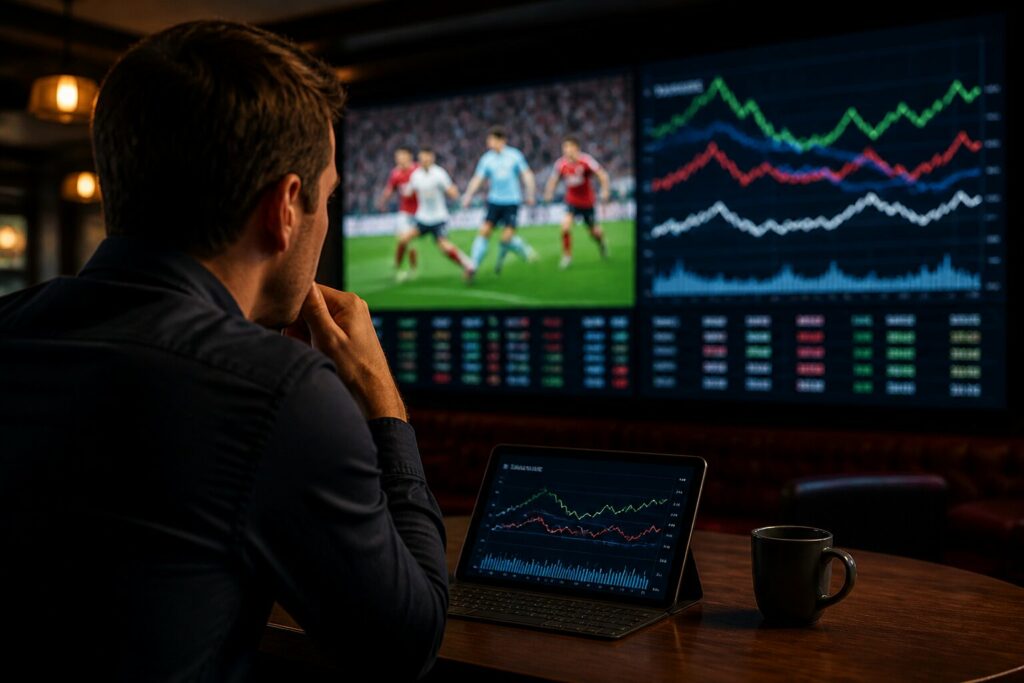
Ever noticed that betting odds never seem to stand still? One moment you think you’ve spotted a good price, and the next it’s moved. That can be frustrating if you’re trying to decide whether to place a bet.
Odds shift for lots of sensible reasons, and understanding those forces helps you make clearer choices. Read on to learn what drives movements, how to interpret them, and what to watch for before you commit to a stake.
What Do Betting Odds Represent?
Betting odds are a way of expressing the probability, as estimated by a bookmaker, that a particular outcome will occur. They do two practical jobs: show the potential return for a winning bet and indicate how likely an outcome is thought to be.
Lower odds normally mean a greater probability, while higher odds indicate a smaller one. Different operators may present slightly different odds for the same event because each combines data, judgement and commercial strategy in its own way. That means comparing prices can be useful if you want the best value, but the numbers themselves should be read as the bookmaker’s view rather than a fact.
How Do Bookmakers Calculate Opening Odds?
Opening odds are set after detailed preparation. Bookmakers gather a wide range of inputs to build a picture of the likely outcome. Key information typically includes:
- historical data
- current form
- injury reports
- head-to-head records
- other relevant statistics, such as venue effects or weather
These data points feed into statistical models that translate the information into probabilities. Model outputs will often be adjusted by experienced traders and pricing teams to account for factors models do not capture perfectly, such as late team news, travel issues, or intangible form.
Pricing teams then convert those probabilities into odds, adding a margin to protect the business and manage expected liability. They may also set limits on stakes to reduce risk on markets where their confidence is lower.
After the opening line is published, bookmakers monitor early market behaviour, bookmaker exchanges and the wider market to ensure their prices remain competitive. Markets can move quickly in response to new information, so bookmakers adjust odds to balance their books and to reflect fresh intelligence.
The opening line is therefore a blend of quantitative analysis and human experience. It serves as the reference point from which movements will follow, and it is revised as new data and betting patterns emerge.
See Our Top-Rated Online Casinos
Find the best online casino bonuses, read reviews from real players & discover brand new casinos with our list of recommended sites
Why Do Odds Move After Markets Open?
Once a market is live, new facts and betting patterns start to influence prices. These can include:
- team announcements such as starting line-ups or tactical changes,
- fresh injury or fitness news about players,
- changing weather or pitch conditions that affect how the game might play out,
- late manager or coach comments and other situational reports.
Any of these pieces of information can prompt immediate adjustments to the odds.
In addition, the way money comes in drives movement. When large amounts are placed on one outcome, odds will often shorten so the bookmaker can limit exposure. Conversely, if little money backs an outcome the odds may lengthen to attract bets and balance the book.
Movements after opening reflect a continual updating process. Bookmakers and betting exchanges constantly weigh incoming information, staking patterns and their own risk limits to keep markets commercially viable and fair for customers.
This ongoing adjustment can create short-term volatility as new information is priced in, followed by slower corrections once the market has absorbed the latest facts and stakes.
How Does Betting Volume Influence Odds?
Betting volume alters how prices behave. Heavy support for one selection causes those odds to fall as a bookmaker seeks to reduce liability. Conversely, if an outcome receives little backing, its price may drift higher to attract interest or reflect a reassessment of probability.
This is as much about balancing a book as it is about responding to perceived value. Bookmakers monitor where money is being placed and move prices to spread risk across different outcomes. They may also limit stakes or adjust limits on certain accounts if a lot of high-value bets arrive on one side.
Volume-driven moves can be sudden, especially in popular events where many bets arrive in a short window. Late-money surges, such as those close to kick-off or after breaking news, often cause the sharpest shifts. It is important to remember that large price moves do not always mean the underlying probability has changed; sometimes they simply reflect the flow of bets or strategic positioning by professional bettors.
How Do Professional Bettors And Syndicates Affect Prices?
When professional bettors or syndicates place sizable, well-researched bets, their stakes can prompt rapid price changes. Large laydowns attract attention because bookmakers and traders treat these transactions as informative signals about an event’s true likelihood. That attention, combined with the size of the stake, can move prices quickly.
Bookmakers and pricing teams may view such bets as coming from sources that rely on:
- sophisticated statistical modelling and data analysis,
- deeper knowledge of form, fitness or conditions, or
- the pooled expertise and resources of a group placing coordinated wagers.
In response, traders often react by tightening odds, reducing available limits or shifting prices across multiple operators to limit liability and align their books. Those reactions aim to manage risk rather than to guarantee that the market assessment is correct.
It is important to stress that a price shift after large bets is a market response, not a prediction of the outcome. For most recreational bettors, trying to mimic high-volume players can be risky. Decisions are generally safer when based on your own research, bankroll management and clear staking plan rather than simply following apparent market moves.
How Do Team News, Injuries And Late Information Change Odds?
Late-breaking information is one of the most immediate causes of odds movement. A last-minute injury, a surprise team omission or an unexpected tactical tweak can change the perceived balance between teams and therefore affect the pricing. Bookmakers and traders incorporate this information quickly to keep markets aligned with the latest facts.
Typical late items that influence odds include:
- last-minute injuries or fitness doubts,
- unexpected team omissions or substitutions,
- tactical changes or formation shifts that alter match-up dynamics.
When such updates arrive, odds can shift in either direction. If a favourite loses a key player, their odds may lengthen to reflect reduced chances. Conversely, if the underdog gains a strong player or the favourite is weakened, the underdog’s odds may shorten as bettors request more of that outcome.
Because these updates can arrive at any time, odds may keep changing right up to the start of an event. Market reaction depends on factors such as how many bets are being placed, how much money is on each side, and each bookmaker’s liability. Higher liquidity markets tend to absorb information faster, while smaller markets can see more pronounced swings from a single report.
Bookmakers and trading teams use a mix of automated feeds and manual checking to update prices. They also monitor the wider market to see how other firms and betting exchanges react, which helps them manage risk and keep prices competitive.
Confirming details through reliable sources before acting helps avoid hasty choices based on unverified reports. Waiting for official team announcements or trusted news wires, and watching how the market settles after an update, can reduce the risk of responding to inaccurate information.
How Do Statistical Models, Algorithms And Trading Systems Impact Odds?
Behind modern pricing are automated systems and human traders working together. Algorithms process vast datasets and generate continuous adjustments to prices when triggered by new inputs or shifts in betting patterns. Traders supervise these outputs and intervene where necessary, applying judgement in situations models may not fully capture.
Traders typically step in for context that models struggle with, such as:
- subtle tactical changes in team setup or strategy,
- unexpected player injuries or selection issues,
- unusual travel, weather or logistical problems that affect performance.
These systems improve responsiveness and consistency in pricing. Algorithms can react far faster than humans to incoming information, and they help maintain coherent odds across markets by managing exposure and liquidity. Risk-management rules and margin settings are built into many systems to limit losses and keep offers sustainable.
However, they are not infallible. Models are tools for estimating probability based on available data and assumptions, and they can be affected by poor data quality, overfitting to historical patterns, or sudden, rare events that lie outside model experience. Latency, low market liquidity and correlated bets can also lead to bigger moves or temporary mispricings that require human correction.
In short, algorithms and trading systems make odds more systematic and responsive, but they cannot remove uncertainty from real-world events. Human oversight, ongoing model recalibration and robust risk controls remain essential parts of the pricing process.
How Do External Conditions Like Weather And Travel Alter Odds?
External factors such as weather or travel arrangements can change how an event is expected to play out. Conditions like rain, wind or heat can favour certain types of players or tactics, and travel disruptions can affect squad selection, preparation or freshness. Bookmakers take these variables into account when setting and adjusting odds in order to reflect how competitive balance may shift.
Typical examples of influences bookmakers consider include:
- Weather conditions such as heavy rain, strong wind or extreme heat that affect playing surfaces and styles.
- Travel-related issues like delayed flights, long journeys or late arrivals that can reduce recovery time or force changes to line-ups.
- Local factors such as altitude, humidity or time-zone differences that might benefit one competitor over another.
Because many of these influences are quantifiable, they generally lead to measured adjustments rather than extreme swings. Reactions tend to be quicker and more pronounced the closer the market is to the event, when new information becomes available and teams or athletes finalise their preparations.
Remember that odds reflect probabilities and not guarantees. Bet responsibly and only with money you can afford to lose.
How Do Media Coverage And Public Sentiment Move Markets?
Media stories and public sentiment shape how people bet, and that in turn affects prices. A high-profile article, viral social media commentary or strong fan sentiment can concentrate betting on a particular outcome and push odds the other way. These moves reflect perception and attention as much as fresh information about performance.
Coverage can influence markets in several ways. It can create a rush of bets that temporarily distorts prices. It can change how traders and bookmakers assess risk, leading to shorter odds or lower limits. It can also alter the balance of money across outcomes, so that the market price reflects attention as much as objective probability.
It helps to separate hype from substance by checking reported facts and considering whether the coverage actually adds new, relevant information about the contest. Useful checks include looking at original sources, confirming quotes or data, and noting whether the item is analysis, rumour, or opinion.
Other practical points to bear in mind are:
- Timing: immediate coverage can produce sharp short-term moves, while more measured follow-up reporting may have a smaller effect.
- Source reliability: reputable outlets and recognised experts are more likely to add useful information than anonymous social posts.
- Market context: small markets or low liquidity events are more easily moved by sentiment than large, liquid markets.
- Longevity: some stories create lasting reassessments, others cause only a brief overreaction.
Keeping a calm, evidence-based view helps avoid being swept along by noise. If you are unsure whether coverage changes the underlying facts, it can be sensible to wait for confirmation before treating market moves as meaningful.
Understanding Implied Probability And Bookmaker Margin
A clear grasp of implied probability and bookmaker margin makes it easier to interpret odds. Implied probability converts odds into a percentage that represents the bookmaker’s assessment of an outcome’s chance. The bookmaker margin, or overround, is the extra percentage built into the market so that total implied probabilities across all outcomes exceed 100%. This margin is how the operator secures a long-term return.
Knowing these concepts shows why consistently beating the market is difficult: prices include a deliberate margin, and odds reflect the operator’s risk management as well as the assessed chance of an outcome. Treat betting as a controlled pastime and make choices with a full awareness of how odds and margins work.
Ready to explore further? Check the comparison tools on this site to see how prices differ across markets and always set sensible limits before placing any bets.
**The information provided in this blog is intended for educational purposes and should not be construed as betting advice or a guarantee of success. Always gamble responsibly.