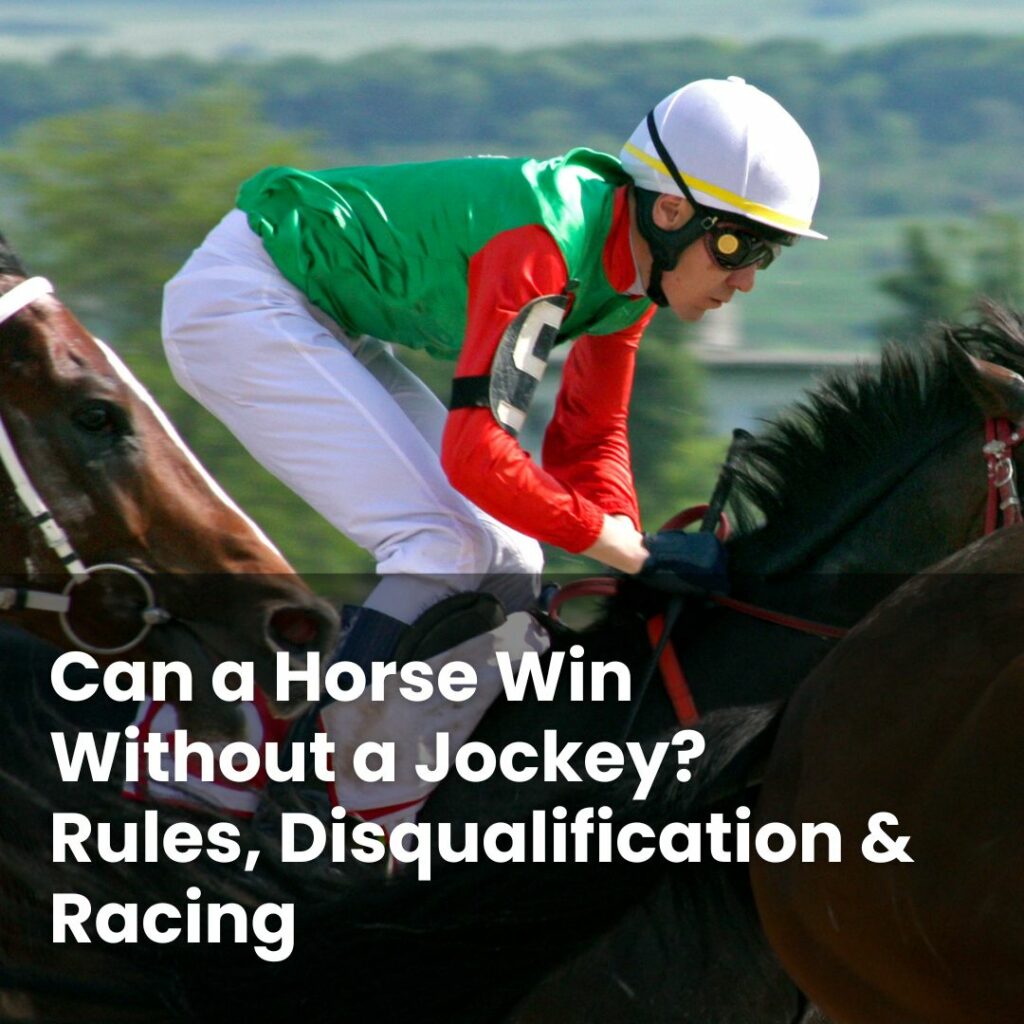
Imagine the excitement of a horse race, thundering hooves, a rising roar from the stands, and horses charging down the final stretch. But what if the jockey, the rider guiding the horse, is unseated part-way through?
It is a situation that raises a lot of questions. Can the horse still cross the line first and be counted? Do the rules say it must be disqualified?
Whether you are curious about the guidelines or simply want to know how these moments are handled, this guide explains what happens, how the result is decided, and why the rider’s presence matters throughout.
When Is A Horse Considered Unridden During A Race?
A horse is considered unridden from the moment its jockey is no longer seated and in contact with it. This can happen if the rider falls after the start, is unseated by a stumble, or parts company at a fence in a jump race.
For a horse to be classed as unridden, there must be total separation. If the jockey is no longer touching the horse or the tack, even briefly, the horse is officially riderless from that point.
It does not matter where on the course the incident occurs. On flat tracks or over jumps, once the connection is lost, the horse is on its own with no instructions from a rider. Stewards watch for these incidents to make sure the record shows exactly when it happened.
With that definition clear, the next piece is how the rules treat a riderless runner at the finish.
BHA Rules On Unridden Horses And Disqualification
The British Horseracing Authority sets and enforces the rules for UK racing. Under those rules, a horse must carry its jockey to the finish for its effort to count.
If a jockey falls off at any stage after the start, the horse is classed as loose or riderless. Even if it completes the course in front, it is removed from the official placings. Only horses that finish with a rider on board are included in the result.
The principle is simple. Both horse and jockey must complete the full course together. If they do not, the performance is not eligible for a finishing position or prize purposes.
Given that, can a riderless horse ever be named the winner?
See Our Top-Rated Online Casinos
Find the best online casino bonuses, read reviews from real players & discover brand new casinos with our list of recommended sites
Can A Horse Be Declared The Winner Without A Jockey?
In the UK, no. A horse cannot be declared the winner without its jockey in the saddle when passing the winning post.
If a horse loses its rider and still runs on, it is not counted in the official placings. The next horse to complete the course correctly with a jockey on board is awarded the win, and the result flows from there for places.
These rules apply across both flat and jump racing and are designed to keep the competition consistent and fair. So who confirms these decisions when incidents occur?
How Do Stewards Decide Result Changes After A Fall Or Unseated Rider?
Stewards are on duty at every meeting to apply the rules and confirm accurate results. When a jockey is unseated, they review race footage from several angles, including slow motion, to pinpoint exactly when horse and rider parted company and whether the horse continued without a rider.
If a horse has finished riderless, it is taken out of the placings and the result is amended accordingly. Where necessary, stewards also consider any interference or rule breaches linked to the incident, take evidence from those involved, and publish their findings.
Once their review is complete, the official result is announced and recorded. For many viewers, the next concern is how betting is settled when this happens.
What Happens To Bets If A Horse Runs Without Its Jockey?
If your selection loses its jockey after the start, it is a non-finisher under UK racing rules. Bets on that horse to win or be placed are settled as losers, because bookmakers pay out according to the official result.
This applies whether the bet was placed online, in a shop, or at the track, and it covers singles, multiples, and each-way bets, subject to the place terms that were advertised. Even if the riderless horse passes the post first, there is no payout because it is not in the placings.
Some firms offer specific concessions, such as faller or unseated rider insurance in selected markets. Where available, the terms are shown before you place a bet. Tote and other pool bets also follow the official result, so a riderless horse is treated as unplaced.
The same clarity carries through to prize money and finishing positions.
How Are Prize Money And Placements Handled For Riderless Horses?
Prize money is paid only to horses that are officially placed, which means completing the course with a jockey on board. If a horse runs on without its rider, it is not eligible for a finishing position or any share of the purse.
When a riderless horse would otherwise have featured in the result, the places move up to the next eligible finishers. Official results published after the race list only those runners that completed the course correctly.
That clear record depends on accurate reporting, which brings us to how incidents are logged.
How Are Riderless Horse Incidents Reported By Trainers And Officials?
When a horse becomes riderless in a race, stewards and racecourse staff track the incident in real time, noting where and when the separation occurred. Camera angles around the course support what they see live, which helps to confirm the sequence of events.
Trainers are informed if their horse is involved and may be asked for an account, particularly if there was contact with another runner or a safety concern. After the meeting, the stewards’ report sets out what happened, which horse lost its rider, and any action taken.
These procedures keep results consistent, settlement clear, and participants fully informed, so everyone understands exactly how riderless incidents are handled from track to results sheet.