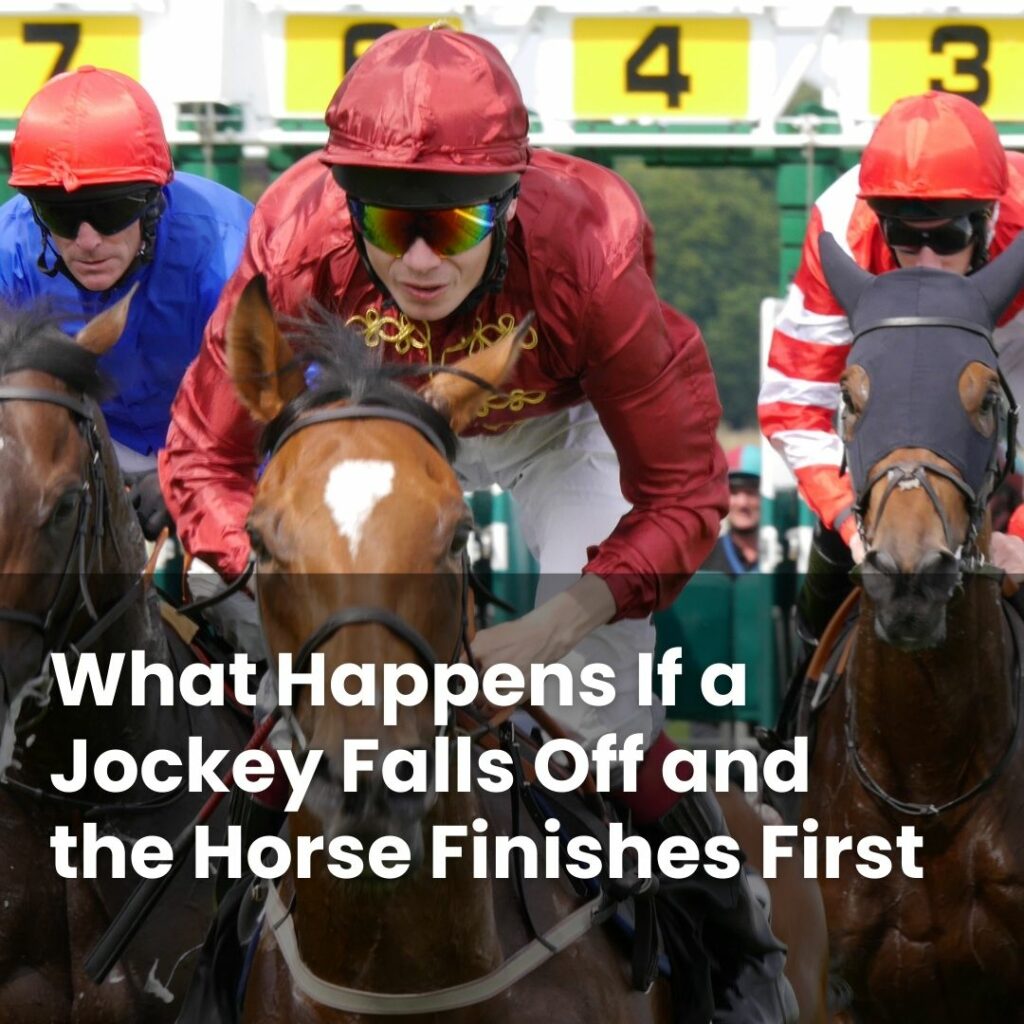
Have you ever watched a race and wondered what happens if a jockey falls but the horse keeps going and crosses the line first? It does happen, and the outcome is not simply about which horse reaches the post first.
Racing works to a clear rulebook that treats the horse and jockey as a team. Safety, fairness and long-standing practice shape what follows when a horse finishes riderless.
So, if you have ever seen a loose horse dash past the winning post, here is how the rules settle the drama on the track and how that affects the result and any bets.
What Happens To My Bet If The Jockey Falls Off?
If a jockey comes off during the race, any bet on that horse is settled as a loser, even if the horse runs on and passes the line ahead of the others. Under British racing rules, a result only counts when the horse completes the course with its jockey on board.
From the moment the rider is unseated, the horse is treated as a loose runner and no longer part of the official result. This is different from a non-runner before the start, where stakes may be returned. Once the race is under way, there is no refund because the selection did take part.
Each-way bets follow the same principle. Both the win and place parts lose when the rider departs, because the horse will not feature in the final placings. That simple rule explains everything that follows, including who can be declared the winner.
Can A Horse Be Declared The Winner Without Its Jockey?
No. In Britain, a horse cannot win or be placed without its jockey. The rulebook requires the jockey to be in the saddle when crossing the line for the performance to be valid.
Even if a loose horse finishes in front, the official result lists only those that carried their jockeys from start to finish. The thinking is straightforward. Racing judges the partnership of horse and rider, so a riderless horse is considered to be running outside the competition.
This is why bets are settled only on the ridden finishers, no matter what a loose horse appears to do.
See Our Top-Rated Online Casinos
Find the best online casino bonuses, read reviews from real players & discover brand new casinos with our list of recommended sites
How Do Different Bets Settle When The Jockey Falls?
Win Bets
A straight win bet on a horse that loses its jockey is settled as a loss. The selection is treated as not completing the race for settlement purposes, so there is no return of the stake.
Each-Way Bets
An each-way stake is two bets in one. If the jockey comes off, both halves are losers because the horse will not be given a finishing position in the official placings.
Forecasts And Tricasts
Forecasts require the exact first and second, and tricasts the first three in order. If one of your selections loses its rider, that part of the bet fails. The rest of the bet can still land if your other picks finish in the required order among the ridden horses, but the loose horse is ignored when the result is calculated.
With that in mind, it helps to know how bookmakers apply the official result in practice.
Bookmaker Settlement Rules After A Jockey Fall
UK bookmakers use the official result to settle every racing market. When a jockey parts company with the horse, that selection is no longer considered for settlement, and any related singles or legs in multiples are marked as losers.
A loose horse that crosses the line first is left out of the placings, so it has no bearing on the finishing order for betting. The only common situation where a stake is returned is a non-runner declared before the race begins, which is not the same as a mid-race incident.
You can always check a firm’s house rules, but they mirror the published result. If anything about the race needs reviewing, that is where the stewards come in.
Stewards’ Inquiry And Result Amendments
Stewards are the officials who oversee each meeting. After a fall, they may hold an inquiry to understand what happened, especially if it might have affected other runners or the finishing order. They review footage, hear from participants and decide whether any rules were breached.
Their findings can change the placings of ridden horses, such as demoting one for interference and promoting another. What they cannot do is place a riderless horse in the result. Once the final outcome is announced and the weighed-in signal is given, all bets are settled to that result.
If you think the settlement you received does not match the published placings, there is a simple way to check.
How Can I Claim A Payout After A Jockey Fall?
In almost every case, there is no payout when your selection lost its jockey, because it will not appear in the official result. If you believe there has been a mistake, contact the bookmaker via live chat, email or in shop with your bet reference so they can compare your ticket with the declared result.
A bet is only paid if the official placings show your selection in a winning or placed position that matches the terms of your bet. Bookmaker rules reflect the sport’s rulebook, so once the result is confirmed, settlement follows it.
What Impact Does A Fall Have On The Horse’s And Jockey’s Record?
A fall or unseat leaves a clear mark on the form book. For the horse, the race is logged with abbreviations such as UR for unseated rider, F for fell, or BD for brought down. These codes appear alongside future entries and can shape how people view a horse’s jumping or racing reliability, particularly over hurdles and fences.
The jockey’s seasonal statistics also record incidents like falls, unseats and being brought down. Trainers and owners look at that information when making riding arrangements, just as punters study it when weighing up a race.
Neither horse nor rider is credited with a finishing position in that race, so there are no winnings or placings. Welfare checks are routine after such incidents, and records are publicly available so everyone can see what occurred and when. That transparency, along with the simple rule that only ridden finishers count, keeps both results and bet settlements clear whenever a jockey comes off.