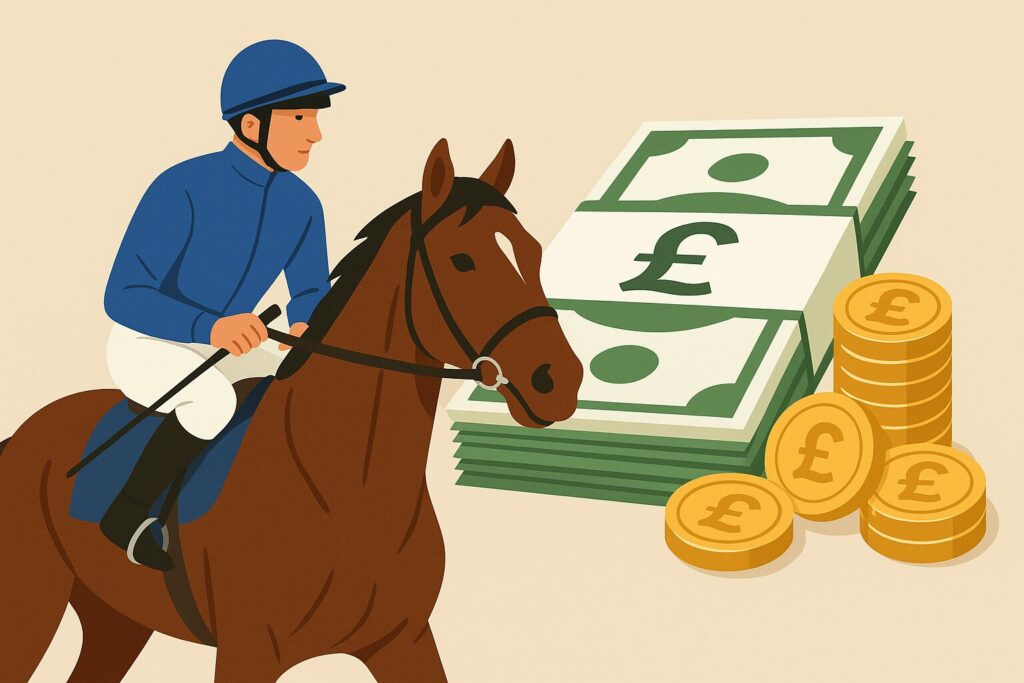
Ever wondered what a jockey really earns in the UK? From the outside it can look glamorous, yet the pay structure is anything but simple.
Jockey income is a mix of riding fees, a share of prize money, and occasional contracts or sponsorships. Some headlines focus on big meetings and huge purses, but most riders work within a more modest, variable range. All figures mentioned are averages based on the latest available information, and each jockey’s experience can be very different.
This guide explains how jockeys are paid, what affects their earnings, and the costs they cover, so you can see the full picture of a jockey’s pay packet in the UK.
What Is the Average Salary of a Jockey in the UK?
The average salary for a jockey in the UK varies, with most full-time professionals typically earning between £27,000 and £40,000 per year, based on data from the Professional Jockeys Association and the British Horseracing Authority. This figure is a broad indication of gross annual income and does not account for personal expenses, tax, or National Insurance contributions.
This ballpark includes both riding fees and prize money shares. Fees are set centrally and differ between Flat and Jump racing, and prize money percentages are governed by industry agreements. Some leading riders earn considerably more through higher volumes of rides, prize-money success, sponsorships, or retainers with owners or trainers. Many others, particularly apprentices and those starting out, make less, as early careers often involve fewer rides and lower-value races.
Jockeys are not on a traditional wage. What they take home depends on how often they ride, the quality of their bookings, and how frequently they finish in prize-paying positions. Regular outgoings also reduce net income, including agent and valet fees, equipment and travel costs, insurance and medical support, along with general living expenses.
Think of the average as a guide, not a guarantee. Individual careers, opportunities, and results shape each rider’s earnings across a season. Factors such as injuries, suspensions, weather-related cancellations, and the balance between Flat, Jump, and all-weather fixtures can all influence how consistent those earnings are month to month.
How Do Jockeys Earn Their Money?
Jockeys are paid through several channels that together make up their total income. The main ones are riding fees, a percentage of prize money, and, for a small number of riders, retainer arrangements.
Riding Fees
Each time a jockey takes a booked ride, they receive a set fee. As of 2024, flat jockeys are paid around £140 per ride and jump jockeys a little over £190. These rates are regulated and paid whether the horse wins or not.
Retainer Fees
Some top riders agree retainers with owners, trainers, or sponsors. A retainer is a regular payment in return for riding commitments, such as first call on rides for a particular yard. Only a minority of jockeys hold these deals.
Prize Money Distribution Explained
When a jockey finishes in a prize-winning position, they receive a percentage of the purse. The typical share is about 7% of the winner’s prize and around 3% for placed horses. These percentages are set by industry rules and paid out by the race organiser.
From these earnings, jockeys usually cover their own work-related costs, including travel and agent fees, so the net amount can be lower than the headline figures. Strong bookings and consistent results tend to make the biggest difference over time.
See Our Top-Rated Online Casinos
Find the best online casino bonuses, read reviews from real players & discover brand new casinos with our list of recommended sites
What Factors Affect a Jockey’s Earnings?
Several factors influence what a jockey earns in practice.
- Experience and reputation. Riders with proven records are more likely to be booked for good horses, secure more rides, and attract retainers. High-profile wins and a steady temperament build trust with owners and trainers.
- Volume of rides. More engagements mean more fees and more chances to earn a prize share. Each ride also carries a set fee under industry agreements.
- Results. Consistent winners and regular placed finishes lift income through prize percentages. Bigger purses at major meetings can make a marked difference.
- Relationships and location. Being linked with successful trainers and stables, or based near busy racing hubs, often creates more opportunities.
- Sponsorship or retainers. These can add stability, though only a small share of jockeys benefit from them.
Taken together, these factors mean income varies from rider to rider and can change from one season to the next. Time out through injury or weather cancellations can also shift earnings.
Do Jockeys Get Paid Per Race or Per Year?
Jockeys in the UK are typically paid per race rather than receiving a fixed annual salary. They earn the riding fee for each booked mount and, if they finish in a prize position, a share of the prize money. The riding fee is set by industry agreement and is paid even if the mount is unplaced.
As a result, there is no guaranteed monthly income for most riders. What they make depends on their bookings, how they perform in those races, and any regular deductions.
How Does Payment Differ for Flat and Jump Jockeys?
The structure is similar for both codes, but the amounts can differ. In both cases, a jockey’s income usually combines a fixed riding fee, a percentage of prize money, and any separate agreements with owners or trainers.
Riding fees for jump jockeys are generally a little higher than for flat riders. As of 2024, jump jockeys can expect more than £190 per ride, while flat jockeys typically receive around £140. These headline figures are set on an agreed industry scale and are reviewed periodically. The fee is usually due once a rider has weighed out, and in some circumstances it is still paid if a horse is withdrawn late. It is worth noting that these are gross amounts, before deductions such as agent and valet fees, insurance contributions, travel and equipment costs.
Prize money shares follow the same percentage rules across both, although prize pots in flat racing can be larger at high-profile meetings. Major jump fixtures still offer strong returns, and payments are distributed according to published terms that cover wins, placed finishes and dead-heats. The share a jockey receives is calculated from the official prize fund and paid after any relevant deductions set out in the Rules of Racing.
Over a season, earnings still come down to ride volume, results on the track, and any individual agreements a jockey has in place. Some riders may have retainers or sponsorships that provide additional, stable income, all within current advertising and equipment rules. Apprentices and conditionals work to different scales and often share prize money with their employing yard, so their take-home figures can look different again. Availability, travel and missed time through suspension or injury also influence how the numbers stack up across the year.
What Additional Income Sources Do Jockeys Have?
Some jockeys supplement their core income with commercial opportunities. These can include structured retainers with owners and short-term projects that fit around riding commitments.
Sponsorship is the most common route for well-known riders, who may receive payments for displaying a brand on their gear. Endorsements can also feature, such as promoting equestrian equipment or sportswear. In certain cases, riders are paid appearance fees for media or promotional work linked to major events. Brand placements are restricted to permitted kit areas under racing rules.
These opportunities are selective and usually reflect a jockey’s profile and results.
What Expenses Do Jockeys Need to Cover?
Jockeys are self-employed, so many business costs come out of their own pocket. That means planning ahead for regular outgoings as well as the unexpected.
Travel is a major outlay, as riders often criss-cross the country, sometimes riding at multiple meetings in a single day. Costs soon add up with fuel, vehicle wear and tear, train fares, parking and tolls. If fixtures run late or rides are booked far apart, there may be hotel stays and meals on the road. Those who pick up rides overseas can also face flights and additional insurance or visa fees.
They also cover their own equipment, including saddles, helmet, body protector, boots and other kit. Safety gear must meet current rules and is replaced frequently, especially after falls or heavy use. Smaller items such as goggles, gloves and whips are recurring purchases, and spares are essential to avoid missing a ride.
Insurance is essential, typically including personal accident and public liability, with some riders also choosing income protection or equipment cover. Many jockeys employ an agent to secure rides and handle bookings. Agents usually take around 10% of riding fees and prize money shares, and commissions may be subject to VAT depending on circumstances.
Riders may also pay valet fees on raceday for saddling and kit management, plus regular costs for medical care, physiotherapy, nutrition and gym work. Licence renewals, mandatory medicals and drug screening, and membership of professional bodies can be significant annual expenses. On top of that come everyday business costs such as accounting, bookkeeping, phone and data, and occasional fines or appeal fees.
As self-employed workers, they are responsible for tax and National Insurance too, including self-assessment and payments on account. Some costs can be claimed as allowable expenses, but they still need to be paid up front and managed carefully.
After these deductions, the net income can be far below the headline figures.
Do Apprentice and Conditional Jockeys Get Paid Differently?
Yes. Apprentice jockeys on the flat and conditionals over jumps have slightly different arrangements to senior professionals. They usually ride under a formal training agreement with a licensed trainer, which sets out duties, support and how earnings are handled.
Their riding fees are set lower than fully fledged jockeys while they are still learning, with minimum rates published each season that sit below the senior scale. In many cases, a portion of their fees and prize money goes to their employer or trainer as part of that agreement, reflecting the coaching, mentoring and day‑to‑day support they receive. Deductions can also cover practical costs such as kit, physio, accommodation or insurance arranged through the yard, so take‑home pay can vary.
As they ride more winners and gain experience, their claim reduces and their pay tends to rise in step with their status. That claim is a weight allowance for the horse rather than a financial bonus, but it often influences the number and quality of rides they can secure. Once they out‑ride their claim and move up the ranks, they transition towards the senior fee scale, and some may pick up retainers or sponsorships. Progress brings more opportunities along with greater responsibility both on and off the racecourse, including higher expectations around fitness, conduct and preparation.
How Do Top Jockeys’ Wages Compare to the Average?
The gap between average and elite earnings is significant.
In strong seasons, leading jockeys can exceed £1 million when prize money shares, retainers, sponsorships and bonuses are combined. These riders tend to secure mounts in prestigious races and are more frequently associated with high-value winners. Headline figures are before expenses, travel and tax. They also do not reflect days without paid rides.
Most professionals operate well below that level, typically within the £27,000 to £40,000 range. Limited rides in top-class races and fewer commercial deals explain much of the difference. Cancellations or injuries can further reduce annual totals.
Are There Any Common Myths About Jockey Salaries?
A few misconceptions often circulate among racing fans.
- All jockeys are high earners. Only a small number reach very high income levels. Most work to far tighter margins, especially after expenses. Agent fees and insurance quickly add up.
- Jockeys have guaranteed pay. In reality, most are paid per ride and income can be unpredictable. Retainers exist, but they are rare.
- Riding a winner always means a big payday. Many races carry modest purses, and the jockey’s share is a small percentage after deductions and fees.
What Challenges Do Jockeys Face in Maintaining Their Income?
Several realities make stable earnings difficult.
Injury risk is ever-present, and time on the sidelines means lost rides and reduced income. Competition for mounts is intense, with many riders chasing limited opportunities each day. Race programmes, seasonal changes, and trainer preferences affect how many rides a jockey gets, while maintaining weight and fitness requires constant effort and investment.
These pressures explain why earnings can fluctuate for even the most diligent professionals. Understanding the mix of fees, prize shares, and expenses helps set realistic expectations about what jockeys in the UK actually take home.