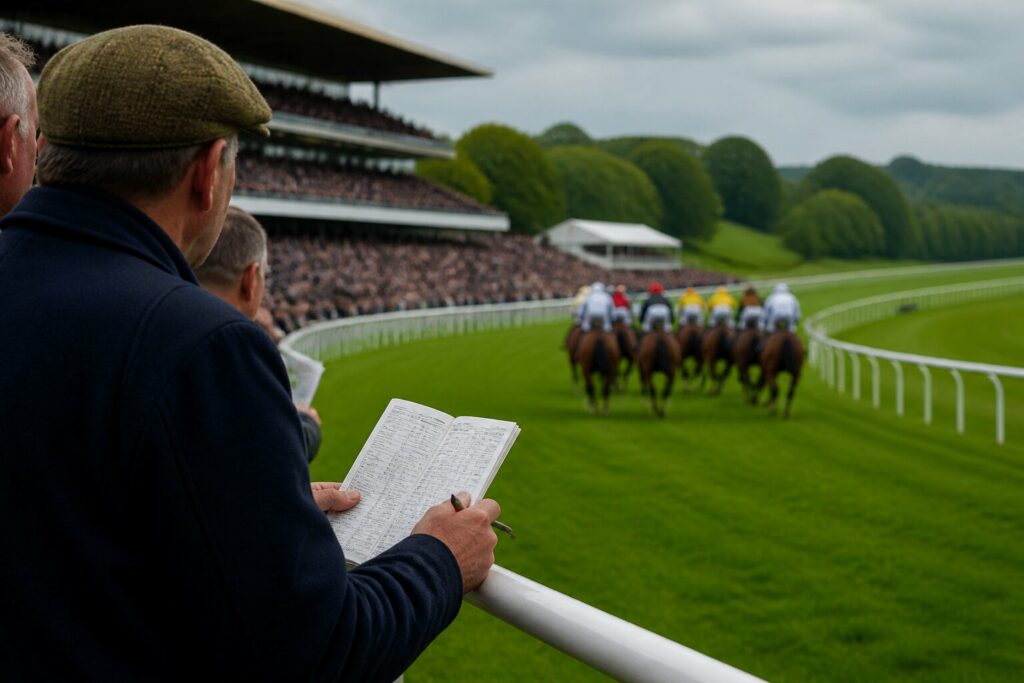
Fancy a flutter on the horses but puzzled by all the numbers? You’re not alone. Odds are central to horse racing, and once you understand how they reflect a horse’s chance, you can make clearer comparisons and spot value.
This guide explains what makes odds “good”, how bookmakers set them, how to convert odds to implied probability, and how to judge different bet types. Read through and you’ll pick up practical ways to assess odds before you place a bet.
What Do Good Odds Mean In Horse Racing?
Good odds aren’t simply the biggest numbers or the largest potential payout. They represent fair value: the price on offer compared with the horse’s true chance of winning. If the market price implies a lower chance than your assessment, the odds may represent value.
Bookmakers form prices by weighing many factors — a horse’s recent form, the rider and trainer, weather and track conditions — and then adjusting prices as money comes in. A useful mental picture is that you want the odds to give you a fair return for the risk you judge the horse to carry.
Rather than chasing very long prices, focus on whether the odds reflect reasonable value for the selection. Where possible, compare prices across operators to see which offers the most attractive terms.
How Do Bookmakers Set Odds For Races?
Odds begin with expert analysis and data. Traders and models consider past performances, class of race, distances, going, draw and known preferences for ground or pace. Those inputs translate into a probability estimate for each runner, which is then converted into initial prices.
After those opening prices are posted, the market reacts. As bets are placed, bookmakers adjust odds to manage liability and reflect fresh information. Late changes in weather, jockey declarations or stable updates will be reflected quickly in the market. This dynamic process means prices can and do move up to race time.
Understanding this helps explain why the price you first see may not be the best one later on, and why comparing prices shortly before a race can be worthwhile.
See Our Top-Rated Online Casinos
Find the best online casino bonuses, read reviews from real players & discover brand new casinos with our list of recommended sites
How Do I Convert Odds To Implied Probability?
Turning odds into implied probability lets you compare a bookmaker’s view with your own assessment of an outcome. It gives a simple percentage that expresses the chance the market is suggesting, which makes different types of odds easier to compare.
For fractional odds such as 5/1, the calculation is:
Implied probability (%) = Denominator / (Denominator + Numerator) x 100
So for 5/1: 1 / (5 + 1) x 100 = 16.67%
For decimal odds such as 6.00, use:
Implied probability (%) = 1 / Decimal Odds x 100
So for 6.00: 1 / 6.00 x 100 = 16.67%
These conversions provide a common basis for comparison. If your judgement of a horse’s chance exceeds the implied probability, the price may look attractive, although that is not a guarantee of a profit.
Bear in mind that bookmakers build a margin into their prices, commonly referred to as the overround, so the sum of implied probabilities across all selections will usually be more than 100%. Also note that small differences can come from rounding when you express percentages to two decimal places.
What Is Considered Good Odds For Win, Each-Way And Place Bets?
Different bet types change how you should judge whether odds are attractive. Below each heading is a short explanation to set the scene.
Win bets require the horse to finish first. Good odds for a win are ones that pay more than the horse’s assessed chance of winning; look for a generous price relative to your estimate.
Each-way bets split the stake between a win and a place return. Value here depends on both the win price and the place terms — the fraction applied to the place part and how many places are paid. Generous place terms can make each-way bets appealing when a horse is likely to be competitive without being favourite.
Place-only bets pay if the horse finishes in the specified top positions. Fair place returns depend on field size and competition; a strong place return relative to the market suggests reasonable value.
Before committing, compare prices and the place terms across operators, and make sure the terms match your expectations for where the horse will finish.
How Do Odds Differ For Short, Mid And Long Price Runners?
Runners are generally grouped by how the market views their chances.
Short-priced runners are favourites with lower odds, reflecting a higher market-assessed chance. Their returns are smaller but they are backed because the market perceives a realistic chance of winning.
Mid-priced runners occupy the middle ground. Their odds indicate a credible chance without the status of favourite, and they often attract attention from bettors who see potential upside relative to the price.
Long-priced runners show larger odds, signalling a much lower market-assessed chance but offering higher returns if they do place or win. These can sometimes be the result of specific conditions suiting the horse or late market moves.
Comparing prices across operators helps locate the most favourable terms for any of these groups.
How To Compare Implied Probability With Your Own Estimate
Once you have the implied probability, set it beside your own estimate based on research. Look at form lines, how the horse runs (front-running, staying on), recent race distances, and whether the going or course suits. If your view assigns a greater chance than the market’s implied percentage, the odds could offer positive expected value.
Bear in mind that personal estimates are subjective and that the market aggregates a lot of information. When your view differs from the market, be clear about which specific factors drive that view — for example, a change in distance or a jockey booked who has a good record with the trainer — because that makes your assessment easier to justify.
Keep your staking modest and consistent with how confident you are in your assessment, and treat any valuable-looking opportunity as one element of a longer-term approach rather than a single decisive bet.
Why Do Odds Change Before A Race?
Odds move because the information set around a race changes. Large volumes of bets on a runner will shorten its price while others drift out. Late updates, such as jockey switches, declarations, weather shifts or withdrawals, change the competitive landscape and are quickly reflected in prices.
These movements are normal and useful: they incorporate new facts and market sentiment. Watching how a price moves can offer insight into whether the market is warming to a horse or losing faith. That said, significant last-minute swings often come from sizeable bets or sudden news, so treat rapid changes as signals to re-evaluate rather than guarantees.
If you want to check a final price, compare live prices across operators shortly before the off, and make staking choices that align with your overall plan. Ultimately, sensible money management and clear reasoning about value matter more than chasing any single fluctuating price.
**The information provided in this blog is intended for educational purposes and should not be construed as betting advice or a guarantee of success. Always gamble responsibly.