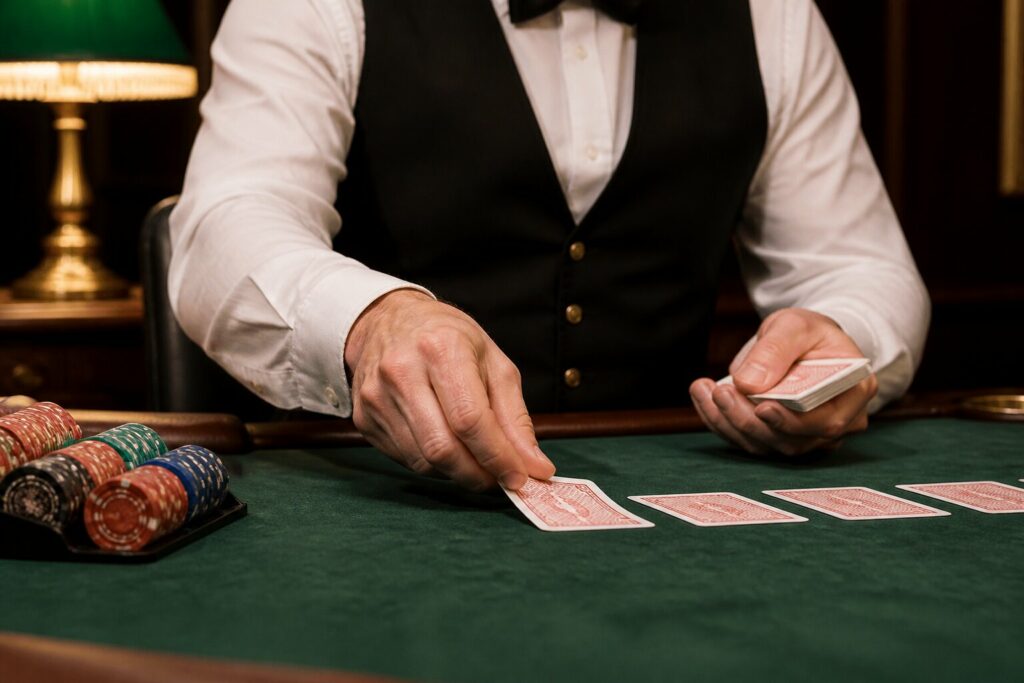
Ever wondered what it really takes to be a skilled poker dealer, or how the person behind the cards affects the pace and fairness of a game? Professional dealing involves far more than passing out cards — it combines technical skill, attention to procedure and steady people management.
This post explains the key card‑handling techniques dealers learn, clarifies what is meant by a “mechanic dealer” and shows why trained, impartial dealers are vital to good poker. Read on for a clear, practical look behind the table.
What Is Mechanic Dealer Poker?
Mechanic dealer poker describes dealing methods that deliberately influence how cards are distributed. That can include sleight of hand to control which cards certain players receive. Because these techniques alter outcomes, they conflict with the standards expected in regulated poker rooms.
By contrast, standard dealing aims for randomness and transparency. Professional dealers use shuffles and cuts designed to remove predictability, and they follow observable procedures so players can have confidence in the integrity of each hand.
Regulated venues and reputable operators put strong safeguards in place so dealing is fair and verifiable. These controls include supervised shuffling, routine audits and staff training focused on consistent, transparent practice rather than covert techniques.
Essential Card Dealing Skills Every Dealer Must Master
Dealers develop a set of core abilities that keep play fair and efficient. Shuffling, for example, is not just a mechanical task: it must break up card order thoroughly without exposing faces or creating patterns. Dealers learn a range of legal shuffle styles and how to combine them so the deck is well mixed.
Dealing itself requires dexterity and rhythm. Cards must be distributed smoothly and evenly so no player gains an informational edge. Alongside dealing, chip handling and pot management demand accuracy — dealers need to recognise bet sizes, place chips correctly and pay winners without hesitation.
Equally important are observation and rule familiarity. Dealers must notice misdeals, call irregularities, and be able to recount previous actions if disputes arise. Customer service skills — calm communication and impartiality — help to defuse tense moments and keep the game moving.
These abilities are taught and assessed in training programmes so dealers meet professional expectations and maintain consistent standards at the table.
See Our Top-Rated Online Casinos
Find the best online casino bonuses, read reviews from real players & discover brand new casinos with our list of recommended sites
Roles & Responsibilities of a Poker Dealer
A dealer’s duties extend beyond card handling. They manage the flow of the game, enforce the rules, and make clear, impartial rulings on routine disputes such as misdeals or exposed cards. When a hand finishes, the dealer handles the pot and confirms the winning hand according to the game’s rules.
Dealers also support compliance by following established procedures for shuffles, cuts and dealing order. Where required, they record irregularities and report any suspicious behaviour to floor managers. Their role is to keep the environment fair and orderly so everyone understands how each hand was resolved.
Good dealers combine technical skill with clear, neutral communication, which helps maintain trust at the tables and ensures everyone knows what happened and why.
Key Differences Between a Mechanic Dealer and a Standard Dealer
The distinction lies in intent and transparency. A standard dealer follows established, observable procedures that preserve randomness and fairness. Every action is performed so that players and supervisors can see the process and verify it.
A mechanic dealer uses covert manipulations to favour certain outcomes; these methods are inconsistent with professional standards. Regulated and professionally managed games screen for such behaviour through training, observation and routine checks to prevent any manipulation.
Understanding this difference helps players recognise why procedural safeguards and trained staff matter.
How Are Card Dealing Skills Assessed in Poker?
Assessment combines practical skill checks with knowledge tests and workplace observation. Trainees demonstrate shuffles and dealing under supervision, showing that they can perform without exposing cards or creating confusion. Assessors also test knowledge of game rules, procedures for handling irregularities and the correct way to settle pots.
Ongoing assessment is common: dealers are periodically observed during live play to ensure their technique remains consistent and compliant. Customer interaction and conflict resolution are also evaluated, since soft skills contribute to a fair, well-managed table.
These checks are designed to confirm that dealers are delivering games as intended and to identify any need for retraining.
Common Misconceptions About Mechanic Dealers
Several myths surround the idea of mechanic dealers. One is that advanced card skills are a legitimate part of professional dealing. In practice, while dexterity and card control can help produce a smooth and efficient deal, deliberate manipulation of outcomes is not acceptable in regulated play. Any technique that risks changing the result of a hand is incompatible with the standards expected by operators and regulators.
Another misconception is that a high level of dealer skill automatically equals manipulation. A dealer can be technically proficient without using those abilities to alter a game. The crucial distinction lies in whether established procedures and transparency are upheld, and whether checks are in place to show that play is fair and consistent.
Clarifying these points makes it easier to understand why oversight, clear procedures and staff training are the proper responses to prevent unfair dealing. Oversight can include supervision, routine audits and independent monitoring. Clear procedures cover how cards are shuffled, dealt and handled, together with incident reporting. Staff training ensures dealers understand both the mechanical skills required and the ethical and regulatory boundaries they must not cross.
Taken together, these measures protect players and the integrity of the game by reducing the chance of intentional or accidental unfairness, and by providing a clear route for detection and remedy if concerns do arise.
Why Are Skilled Dealers Important in Poker Games?
Skilled dealers make games run efficiently and help maintain a steady pace. They take care of routine tasks that would otherwise fall to players, which keeps play moving and reduces downtime between hands.
They also play a key role in reducing conflict. A competent dealer:
- minimises disputes by applying rules consistently and fairly
- ensures the same procedures are followed for every hand
- intervenes quickly and impartially when disagreements arise
Their competence reduces the chance of accidental misdeals and speeds up resolution when issues occur. That means fewer interruptions and a clearer, more predictable flow to sessions.
Beyond procedure, a reliable dealer signals to players that the game is being overseen by someone who understands both the rules and the need for impartiality. This reassurance supports a healthier playing environment, promotes fairness and helps protect the integrity of results.
Skilled, well monitored dealers are therefore central to creating a trustworthy, well managed poker experience while supporting responsible play.
What Qualities Make a Great Poker Dealer?
A strong dealer combines technical skill, meticulousness and calm communication. Technical skill covers accurate shuffling and dealing, quick chip counts, and correct application of game-specific procedures. These hands-on abilities reduce delays and keep play moving smoothly.
Attention to detail prevents errors in dealing and pot handling. Notices small irregularities, enforces betting rules consistently, and spots mistakes before they escalate. That meticulous approach protects the integrity of the hand and minimises disputes at the table.
Clear, neutral language helps when explaining rulings or calming disputes, while patience ensures consistent treatment of all players. A measured tone and simple, precise explanations make decisions easier to accept and reduce the chance of misunderstandings. Patience also helps when teaching new players or when a session runs long.
A great dealer also demonstrates professionalism under pressure: staying composed when hands are large, when rules are challenged, or when play becomes heated. That steadiness reinforces confidence among participants and helps maintain orderly play. Professionalism includes punctuality, appropriate appearance, and following venue procedures at all times.
Operators look for these qualities during recruitment and ongoing training because they directly affect the quality and fairness of games. Training programmes and regular assessments help maintain standards, while experienced dealers contribute to a positive atmosphere that attracts and retains players.
Mechanic Dealer Poker: Frequently Asked Questions
Below are concise answers to common queries about dealers and the term “mechanic dealer,” focusing on how standards are applied in regulated settings.
What professional qualities are required of a poker dealer?
Professional dealers need accuracy, rule knowledge, strong observation and clear communication. These qualities help them manage the table fairly and resolve routine issues without disrupting play.
Why is integrity important for poker dealers?
Integrity ensures that dealing procedures are followed and that rulings are impartial. This builds player confidence and protects the credibility of the game.
Are mechanic dealer skills allowed in regulated poker rooms?
No. Techniques intended to influence card outcomes are contrary to the standards that regulated operators enforce. Dealers are expected to use transparent procedures that preserve randomness.
How do operators uphold ethical standards?
Operators maintain standards through structured training, practical assessments and routine oversight of staff performance. These measures help ensure dealing is consistent, transparent and compliant.
Final note: understanding the difference between competent, professional dealing and manipulative techniques helps players recognise why procedures, training and oversight matter. Well trained dealers keep games fair, clear and enjoyable for everyone at the table.