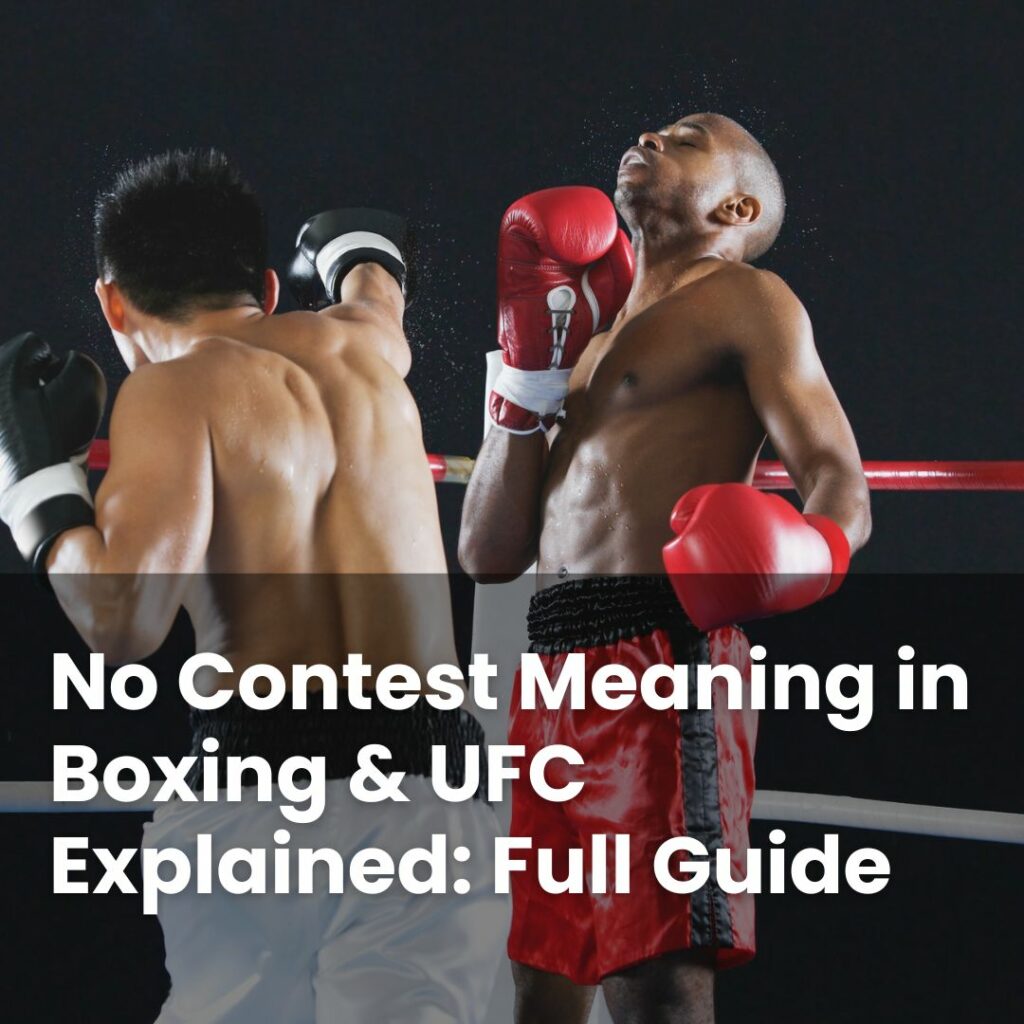
Boxing and UFC matches do not always end with a clear winner or loser. Sometimes, a bout finishes as a no contest. The term can seem confusing at first, but knowing what it means helps make sense of results, records, and the way fights are judged.
A range of issues can lead to a no contest, from accidental fouls to problems with the ring or cage. These calls affect how bouts are recorded and, in some cases, how wagers are settled.
This guide explains what a no contest means in both sports, when it is used, how it differs from draws and disqualifications, the effect on rankings, the betting implications, and why rules can vary between organisations.
If you choose to bet, do so within your means and use the tools available to help you manage your play.
What Does No Contest Mean In Boxing And UFC?
A no contest in boxing and UFC means the fight has stopped before a winner or loser is declared, and the outcome does not count on either competitor’s official record. This is different from a draw, where the match goes the distance and the judges’ scores leave the fighters level.
No contest decisions usually happen because of events outside the normal flow of the fight, such as an accidental injury or a serious issue with the venue or equipment. When officials judge that a fair result is not possible, the fight ends with no official winner or loser.
If a bout is ruled a no contest, it is treated as if it never occurred for record purposes. The decision protects the integrity of the result when circumstances prevent a proper conclusion.
Curious what kinds of moments trigger that call in the first place? The next section breaks down the most common scenarios.
What Circumstances Lead To A No Contest?
A fight may end as a no contest when something outside the usual competition rules disrupts the match and makes it unfair or unsafe to continue. These are the main situations where it can happen.
Accidental Head Butts And Accidental Fouls
Accidental fouls, such as a clash of heads, a low blow, or an unintended elbow, can lead to a no contest if they happen before a certain point in the bout and leave a fighter unable to continue. The exact threshold differs between boxing and MMA.
Because these incidents are unintentional, officials aim to avoid punishing either fighter with a loss when the contest cannot carry on. If the foul occurs early and ends the bout, the match is often ruled a no contest rather than going to the scorecards.
Outside Interference And Ring Or Cage Issues
Interference from outside the ring or cage can also force a no contest. Examples include a spectator entering the ring, a damaged canvas, faulty lighting, or an emergency in the venue that stops the action.
When these situations prevent the fight from proceeding fairly or safely, officials can halt the bout and record it as a no contest, so neither athlete’s win or loss column is affected by an incomplete match.
Because accidental fouls are such a common trigger, it helps to know how referees and commissions handle them in practice.
See Our Top-Rated Online Casinos
Find the best online casino bonuses, read reviews from real players & discover brand new casinos with our list of recommended sites
How Is An Accidental Foul Treated In Boxing And UFC?
Accidental fouls are handled under specific rules set by each sport’s governing bodies, and the timing of the incident is crucial.
In boxing, the referee first decides whether the foul was accidental or intentional. If it is accidental and a fighter cannot continue, the outcome depends on how many rounds have been completed. When the stoppage occurs before a set number of rounds (often four in professional boxing), the result is usually a no contest. If it happens later, the bout may go to the judges’ scorecards, producing a technical decision.
In the UFC and mixed martial arts, the principle is similar. If an accidental foul leaves a fighter unable to continue and the stoppage comes early, the bout is often declared a no contest. If enough of the fight has taken place, officials can use the judges’ scores to reach a technical decision. These approaches mirror the scenarios described earlier but apply them to the structure of each sport.
Sometimes, the biggest call comes after the final bell rather than during the action.
Can A Result Be Overturned To A No Contest After The Fight?
Yes. A commission or governing body can change a result to a no contest after a fight has ended if evidence shows the bout was not conducted fairly or within the rules.
Common reasons include a failed drug test, a serious officiating error, or a rule violation that was missed on the night. The review process is formal, often involving hearings and written decisions, and each case is considered on its own facts. Overturning a result is not common, but the option exists to protect sporting fairness.
That leads to a frequent question for fans: how does a no contest compare with other official outcomes?
No Contest Vs Draw Vs Disqualification
It is useful to distinguish these three results, as they carry different meanings for records, rankings, and how a bout is viewed.
- A no contest is called when the fight is stopped early due to circumstances outside the fighters’ control, and no winner or loser is declared. It does not add a win or a loss to either record.
- A draw happens when, after the full scheduled rounds, the judges’ scores are level or fit the sport’s criteria for a draw. The bout is completed, but neither fighter is named the winner.
- A disqualification occurs when a fighter commits a serious rules breach, either through repeated fouls or a single severe infraction. The opponent is awarded the win, and the disqualified fighter receives a loss.
Understanding these distinctions helps explain why some results change records while others do not. The next question is how they influence rankings and career trajectories.
How Does A No Contest Affect A Fighter’s Record And Rankings?
A no contest does not count as a win or a loss on a fighter’s official record in boxing or UFC. The bout is listed separately, and the totals for wins, losses, and draws remain unchanged.
Rankings are more nuanced. Often, a no contest has little direct effect because there is no official winner. However, the context matters. If the no contest follows a failed drug test or a serious rules issue, disciplinary action may influence a fighter’s standing, future matchmaking, or eligibility, even though the record itself does not show a loss.
With records and rankings in mind, many fans also want to know how this outcome affects betting markets.
How Are Bets Settled When A Fight Is Ruled No Contest?
When a fight is ruled a no contest, most bookmakers void affected markets such as the outright winner or method of victory, and return stakes because there was no official result. Some markets, like round betting or distance-related wagers, can have specific terms that determine whether they stand or are voided.
Settlement policies vary, especially if a result is overturned after the event. Many operators settle based on the decision at the time and do not reopen markets unless their rules say otherwise. Always check the market rules before placing a bet. On our site, settlement terms are shown alongside each market so you can see how a no contest would be handled.
Because rules shape these decisions, it is worth knowing how they can differ across organisations and locations.
How Do Rules Differ Between Boxing Commissions And The UFC?
Boxing is overseen by multiple commissions at state, national, and international level, each with its own regulations, while UFC events follow the Unified Rules of Mixed Martial Arts alongside the requirements of the host jurisdiction.
A key difference is the round threshold used when an accidental foul stops a bout. Boxing commissions may require a certain number of completed rounds before going to the judges’ scorecards. The UFC uses thresholds tailored to MMA’s structure, with provisions for technical decisions if enough of the fight has taken place.
Procedures for protests and appeals also vary. Some commissions publish detailed timelines and standards for overturning results, while others handle reviews case by case. This means outcomes can look slightly different from one venue to another, and between boxing and UFC cards.
If you choose to bet on combat sports, set limits that suit your circumstances and use safer gambling tools. If gambling starts to affect your well-being or finances, seek support early. Organisations such as GamCare and GambleAware provide free, confidential help.
Understanding how and why a no contest is called will make results clearer to follow, whether you are watching as a fan, tracking a fighter’s career, or checking how a market might be settled.