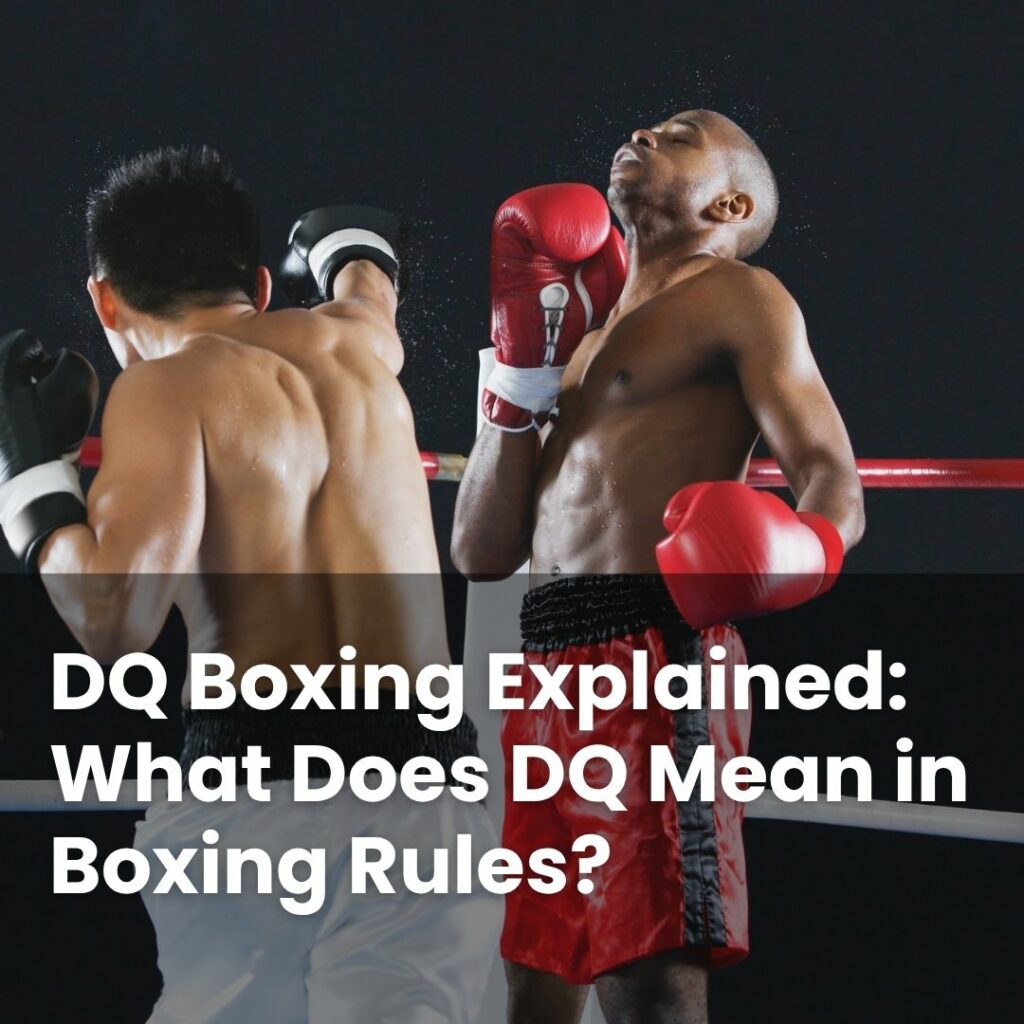
Disqualification, or “DQ”, appears in boxing results when a boxer breaks the rules in a way that ends the bout. Knowing what triggers a DQ helps fans make sense of what they are seeing and why a fight has been stopped.
This blog post explains what a DQ is, how referees reach the decision, and the types of fouls that can cause it. You will also find the difference between point deductions and disqualification, plus how intent and repeated offences influence what happens.
We then look at the consequences for a boxer’s record, and how appeals work if a team believes a decision was wrong. Along the way, you will find clear examples so each part is easy to follow.
When Can A Boxer Be Disqualified?
A boxer can be disqualified when they break the rules in a way that risks safety or undermines the contest. The referee is responsible for enforcing the rules and may issue warnings, deduct points, or, in more serious cases, stop the fight and declare a DQ.
Typical triggers include illegal moves, such as hitting below the belt, headbutting, using elbows, striking a downed opponent, or throwing punches after the bell. Persistent holding, refusing to obey instructions, spitting out the gumshield to buy time, or rough tactics that cause injury can also lead to escalating penalties and, if it continues, a disqualification. Misconduct from a boxer’s corner, like entering the ring during a round, may result in the boxer being disqualified as well.
Referees aim to keep the bout safe and within the rules. If a foul is intentional, or if a boxer ignores repeated warnings, a DQ becomes far more likely.
Curious how that decision is actually given on the night? That is up next.
How Is A Disqualification Declared In The Ring?
Disqualification is usually declared by the referee. If a serious or repeated foul occurs, the referee will halt the action, send the boxers to neutral corners, and make a clear gesture, often pointing to the offending corner and crossing their arms to indicate a DQ. The ring announcer then confirms the official result.
In some situations, the referee may consult the ringside doctor or officials before deciding, especially if a foul has caused an injury that prevents a boxer from continuing. The referee’s report, along with judges’ cards, ensures the decision is recorded correctly.
Now that the process is clear, it helps to know which fouls most often cause trouble.
See Our Top-Rated Online Casinos
Find the best online casino bonuses, read reviews from real players & discover brand new casinos with our list of recommended sites
Common Fouls That Lead To Disqualification
Certain fouls in boxing may lead to disqualification if they are judged severe or persist despite warnings. Understanding these helps explain why a bout may end suddenly.
Examples Of Fouls That Cause A DQ
Some fouls are considered more serious and may result in an immediate or eventual disqualification, especially if repeated or intentional. These include:
- Low Blows: Punching below the belt is not permitted.
- Headbutting: Using the head to strike an opponent is not allowed.
- Hitting After The Bell: Throwing punches after the round has ended.
- Rabbit Punching: Hitting the back of the head can be dangerous and is grounds for a DQ.
- Holding And Hitting: Grabbing while throwing punches can be penalised.
- Biting: Any form of biting during a match will result in a disqualification.
- Refusing To Follow Instructions: Ignoring referee directions on multiple occasions.
All of these rules serve the same purpose: protecting the boxers and the integrity of the bout.
Not every foul ends a fight, though. Often it starts with points being taken away.
Points Deductions Versus Disqualification: What’s The Difference?
Referees use different measures depending on the severity and frequency of fouls. A points deduction is used when a rule is broken but the offence is not extreme. The referee stops the action, issues a warning if needed, and signals to the judges to remove one or more points from the offending boxer’s score for that round. Those deductions can swing a close contest even if the bout continues to the final bell.
Disqualification is a stronger step. It ends the bout immediately when a foul is serious, clearly intentional, or keeps happening despite warnings and deductions. In short, deductions keep the contest going with a penalty; disqualification stops it and awards the result to the other boxer.
That judgment often turns on two things: intent and repetition.
How Does Intent Or Repetition Affect A DQ?
Intent matters because it shows whether a boxer meant to commit the foul. A deliberate low blow, a purposeful headbutt, or hitting after the bell can prompt an immediate DQ. By contrast, accidental fouls are usually handled with warnings or deductions, unless the damage means the opponent cannot continue.
Repetition also changes the picture. A single minor infringement might draw a caution, but the same foul repeated can lead to escalating penalties and, if the behaviour continues, disqualification. If an accidental foul causes an injury that stops the fight, the result may be decided on the scorecards or ruled a no contest, depending on how much of the bout has been completed. If the foul is judged intentional in those circumstances, a DQ is far more likely.
Consequences Of A Disqualification For Boxers And Results
When a boxer is disqualified, the bout ends at once. The opponent wins by disqualification, and the result appears on both fighters’ official records. Depending on the seriousness of what happened, the commission may issue fines or suspensions, and, if a title was on the line, belts and rankings can change hands.
From a results perspective, a DQ is treated like any other official outcome. Most betting operators settle wagers on the referee’s decision at the time, but rules vary, so it is wise to check how your market is defined.
So, if a team disagrees with the call, can anything be done?
Can A Disqualification Be Appealed Or Overturned?
A disqualification can be appealed in some circumstances. The boxer’s camp submits a formal request to the relevant commission, which reviews the referee’s report, video footage, and any other evidence. Appeals are taken seriously, but reversals are uncommon and usually require clear mistakes or new information.
If an appeal succeeds, the official record is updated. In some cases, a rematch may be ordered to provide a clean resolution.
If you choose to bet on boxing, set personal limits, stake only what you can afford to lose, and take breaks. If gambling starts to affect your well-being or finances, seek support early. Independent organisations such as GamCare and GambleAware provide free, confidential help.
Understanding how DQs work makes results easier to follow and helps you watch each bout with more confidence.